

How to Build the Perfect Indian Wedding Photography Timeline From Morning Preparations to the Reception


I’m Alex Kaplan, a wedding photographer and videographer based in New Milford, NJ, serving Northern NJ, NYC, and the Hudson Valley. For over 30 years, I’ve helped couples enjoy their day without feeling rushed, while I quietly capture the real moments, natural portraits, and genuine emotions you’ll still love decades from now.

After more than 30 years photographing weddings across Northern New Jersey and the NYC metro area, I can tell you this: an Indian wedding photography timeline is one of the most rewarding schedules I build, and one of the easiest to get wrong if nobody plans it with intention. Multiple ceremonies, multiple outfit changes, and a guest list that can run into the hundreds all ask more of a timeline than a single-ceremony wedding does. Get the structure right, and every ritual gets the coverage it deserves.
This guide walks through how I build an Indian wedding photography timeline from the morning of the wedding through the final reception send-off. It is written from real experience, not a generic template, so you can bring it straight to your photographer and your planner and start mapping your own day.
A traditional Western wedding photography timeline usually covers one getting-ready block, one ceremony, and one reception. An Indian wedding photography timeline has to account for layered rituals that each carry their own meaning, their own pacing, and often their own outfit. The baraat, the milni, the mandap ceremony, and the reception can each run long, and each one loses something if it gets rushed for the sake of the schedule.
Couples planning a Sagai or engagement ceremony already know how much detail lives inside a single Indian tradition. A wedding day multiplies that by five or six events, sometimes across two full days. If you want the full breakdown of what each ritual involves and why it takes the time it takes, The Knot’s guide to Hindu wedding traditions is a genuinely useful reference to share with your photographer and your families before the day arrives.
The goal of any Indian wedding photography timeline is simple, even if the day itself is not. Every ritual gets seen, nobody feels rushed through something sacred, and the photography team is guiding the day instead of chasing it.
This is where experience matters more than a template ever could. I have photographed North Indian, South Indian, Punjabi, and multi-faith celebrations, and no two timelines look exactly alike. A Gujarati wedding paces differently than a Tamil ceremony, and a Sikh Anand Karaj has its own rhythm entirely. The structure below is a starting point, built to flex around your family’s specific traditions rather than replace them.
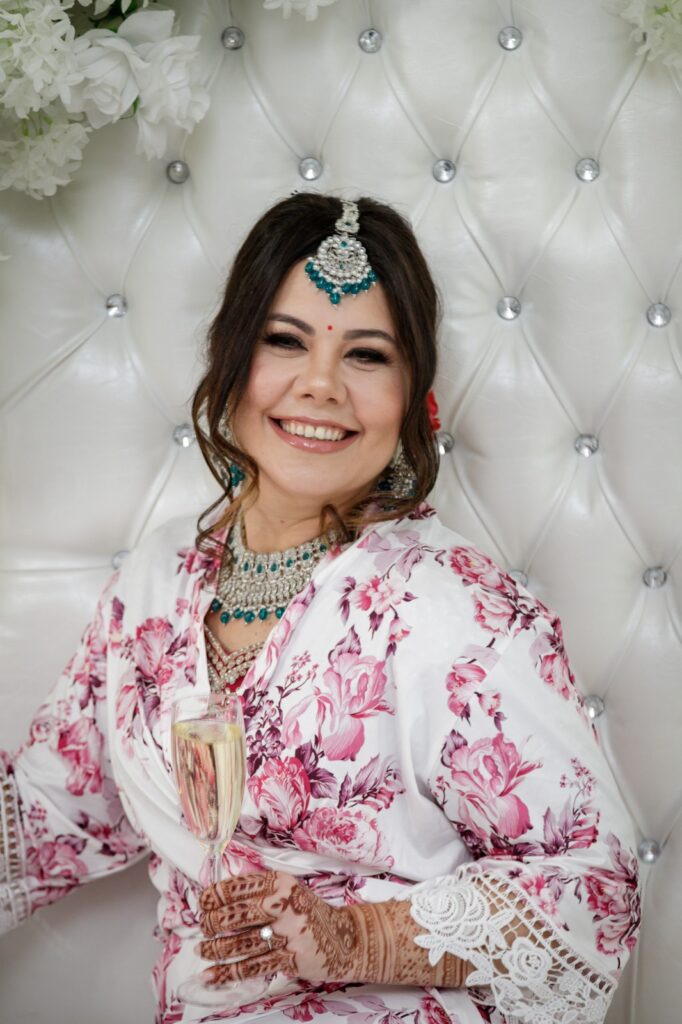
The morning is where an Indian wedding photography timeline earns its keep. Between the bride’s hair and makeup, the groom’s sherwani or bandhgala, and the quiet family moments before anyone gets dressed, this block regularly needs two to three hours of dedicated coverage, sometimes across two separate locations if the bride and groom are preparing apart.
I always build in time for the details that get missed when a morning feels rushed. The bangles being slid on one at a time. A mother adjusting a dupatta for the tenth time because it has to be perfect. A father seeing his daughter in her lehenga for the first time. These moments do not wait for a schedule, so the schedule has to wait for them.
If mehndi or haldi rituals are happening the same morning rather than on a separate day, add another 30 to 45 minutes of buffer. Turmeric paste and henna both take time to apply and even more time to photograph well, and neither ritual should feel like it is competing with the clock.
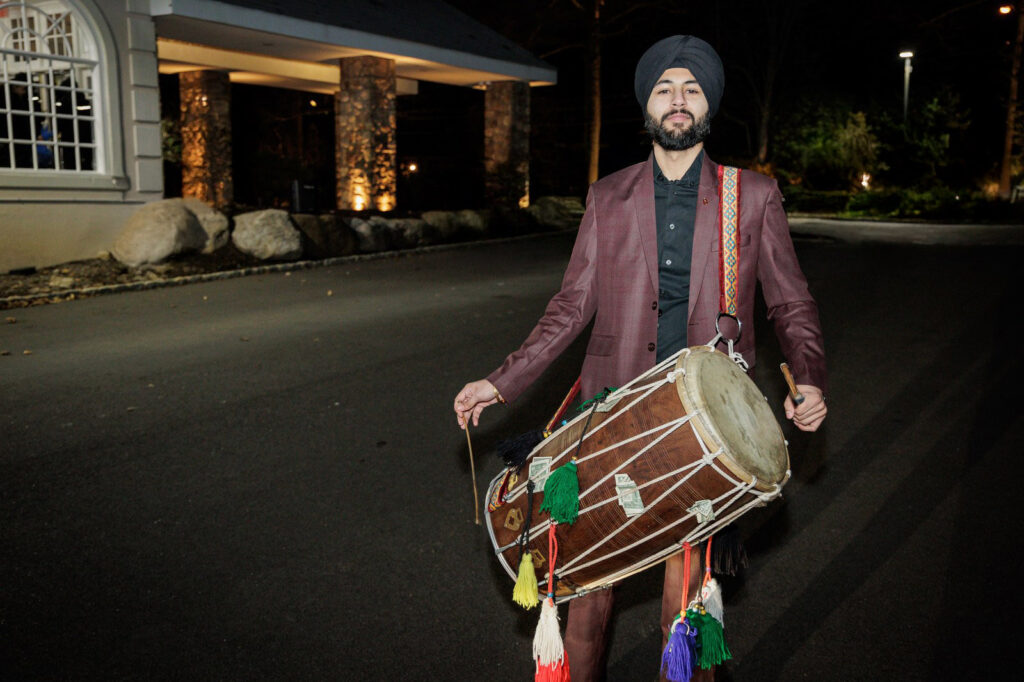
The ceremony block is where an Indian wedding photography timeline needs the most breathing room. The baraat alone, with the groom’s procession, the dhol drummers, and the milni greeting between families, can easily run 30 to 45 minutes before the couple even reaches the mandap.
Once the ceremony begins, plan for 60 to 90 minutes under the mandap depending on the officiant and the specific rituals being performed. The saat phere, the exchange of garlands, and the kanyadaan each deserve full, unhurried coverage rather than a photographer trying to guess which moment comes next. I recently covered a multicultural celebration at Crystal Plaza in Livingston, where a Hindu mandap ceremony shared the day with Eastern European traditions, and the couples who plan for this kind of pacing are always the ones who end up with a gallery that actually reflects how the day felt.
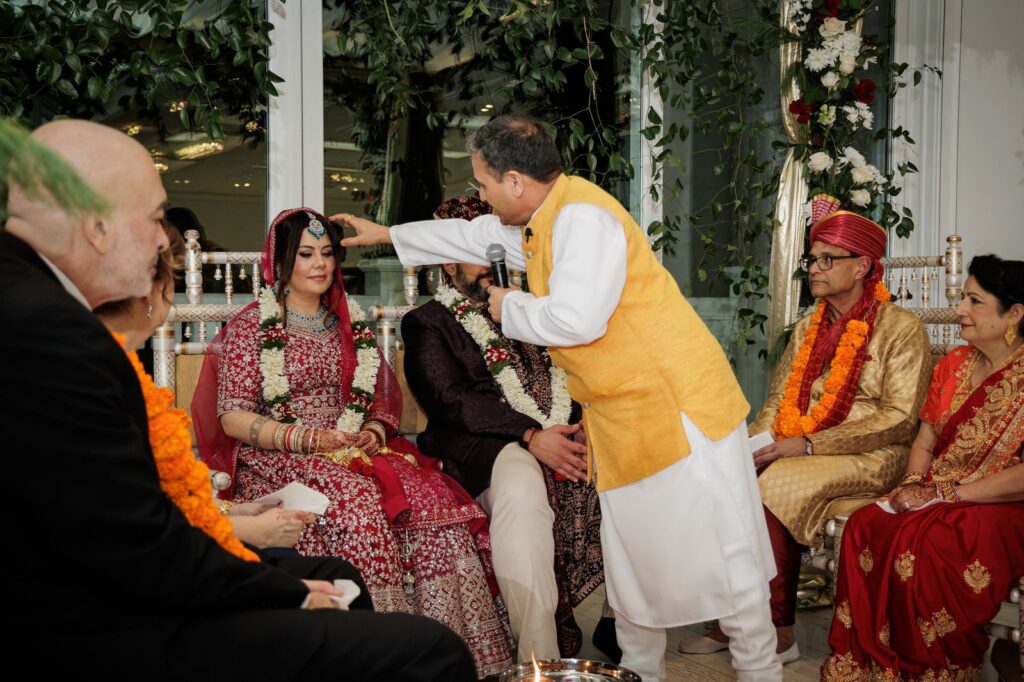
Photographing a ceremony this layered means positioning matters as much as timing. I stay close enough to catch expressions during the sacred fire rituals without ever stepping into the priest’s sightline or blocking a family member’s view.
A second photographer earns their place at almost every Indian wedding ceremony I cover. While one of us stays close to the mandap for the couple’s expressions, the other can catch the reactions rippling through both families, the aunt wiping her eyes, the grandfather nodding along with the mantras. Those wider reactions are just as much a part of the story as the ceremony itself.
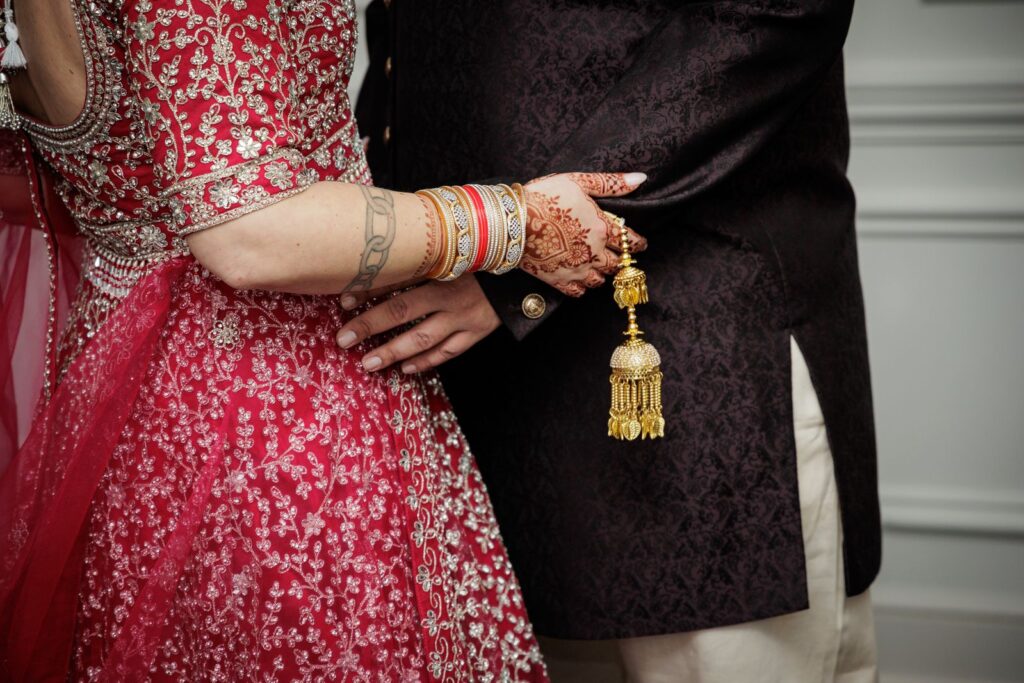
Indian wedding receptions run longer and louder than most Western receptions, and the photography timeline needs to match that energy instead of fighting it. Between the grand entrance, multiple outfit changes, choreographed dances, and speeches from both families, a reception can easily fill four to six hours of coverage on its own.
Build in a short buffer between the ceremony and the reception, even if they are happening at the same venue. Couples change outfits, family members reset for photos, and a rushed 15-minute turnaround almost always shows up in the images later as a missed moment instead of a captured one.
Golden hour still matters at an Indian wedding, even with an evening reception ahead. If there is any window for portraits in that soft, warm light before the reception fully kicks off, I build it into the timeline on purpose rather than hoping it happens on its own.
Every wedding is different, but here is a realistic example of how these blocks fit together for a single-day Indian wedding with an afternoon ceremony and an evening reception. Use it as a starting point, then adjust the specifics with your photographer around your family’s own events.
| Time | Event |
|---|---|
| 8:00 AM | Hair, makeup, and detail photos begin |
| 9:30 AM | Getting dressed, family candids |
| 10:15 AM | First look or pre-ceremony portraits |
| 11:00 AM | Baraat procession begins |
| 11:45 AM | Milni greeting between families |
| 12:15 PM | Mandap ceremony begins |
| 1:45 PM | Family portraits |
| 4:00 PM | Reception detail and venue photos |
| 6:00 PM | Grand entrance |
| 7:00 PM | Speeches and dinner |
| 8:30 PM | Dance floor coverage |
If your day includes a separate mehndi, haldi, or sangeet, each of those gets its own timeline built the same way, not squeezed into this one.
A few habits separate the couples who feel calm on their wedding day from the couples who spend it watching the clock. Here is what I walk every couple through when we build their Indian wedding photography timeline together.
For a deeper look at how I structure a full wedding day from start to finish, my wedding photography timeline guide walks through the same principles for any celebration. And if you want to see where timelines most often go wrong, I break it down in this guide to common wedding timeline mistakes. Coverage length matters just as much as pacing, and my wedding photography packages page explains how hours and pricing work together so you can plan accordingly.
Most Indian weddings need 10 to 12 hours of coverage, sometimes more across multiple events. Multi-day celebrations with a separate mehndi, sangeet, or haldi function typically need coverage planned for each day individually.
Yes, if the baraat starts at a different location than the mandap. Coordinating arrival times between the two keeps the timeline realistic and avoids missing the procession entirely.
Plan for 20 to 30 minutes per change. Traditional attire involves more layers, draping, and jewelry than most Western outfits, and rushing it shows in the photos.
In most cases, yes, especially with a second shooter to cover getting-ready details and guest candids simultaneously. Coverage length should be planned around the full shape of the day.
An Indian wedding photography timeline built with this much care takes real planning, but you should not have to build it alone. If you are planning a wedding, engagement, or proposal in Northern New Jersey or the NYC metro area and want help mapping out your day hour by hour, I would love to hear from you. Reach out through my contact page and let’s start planning a timeline that lets every tradition be seen the way it deserves.
About Me — But Really, It’s About You
The most meaningful wedding photos never come from stiff poses.
They come from the quiet laugh you didn’t think anyone saw.
The look on your partner’s face during the vows.
The warmth of your people all around you.
I’ve been doing this for over 30 years — and I still get nervous before every wedding.
Not because I’m uncertain, but because I know how much it matters.
After photographing hundreds of weddings over the past few decades, I’ve learned something simple:
The best photos happen when you feel fully present.
That’s why I work calmly, behind the scenes — guiding when it helps, then stepping back when the real moments unfold. I’m always anticipating what’s next, so you never have to think about a thing.
My goal is simple: to help you relax, feel confident, and walk away with photos that feel like you — not a filtered version of someone else’s idea of perfect.
Most of my couples say the same thing:
“We’re so glad we didn’t have to worry.”


trusted by over 800 couples In NYC & NJ you’re in great hands.
201-834-4999 | 917-992-9097
alex@alexkaplanweddings.com
I’d love to hear what you’re planning. I’ll personally reach out to learn more and see how I can help.


