
Your wedding day should feel relaxed, joyful, and completely yours.
I’m Alex Kaplan, a wedding photographer and videographer based in New Milford, NJ, serving Northern NJ, NYC, and the Hudson Valley. For over 30 years, I’ve helped couples enjoy their day without feeling rushed, while I quietly capture the real moments, natural portraits, and genuine emotions you’ll still love decades from now.
Browse by Category:
WEDDINGS
Browse by Venue:
view more

REQUEST INFORMATION
Want to feel like THIS on your wedding day?
Availability is limited. Check Your Date Here


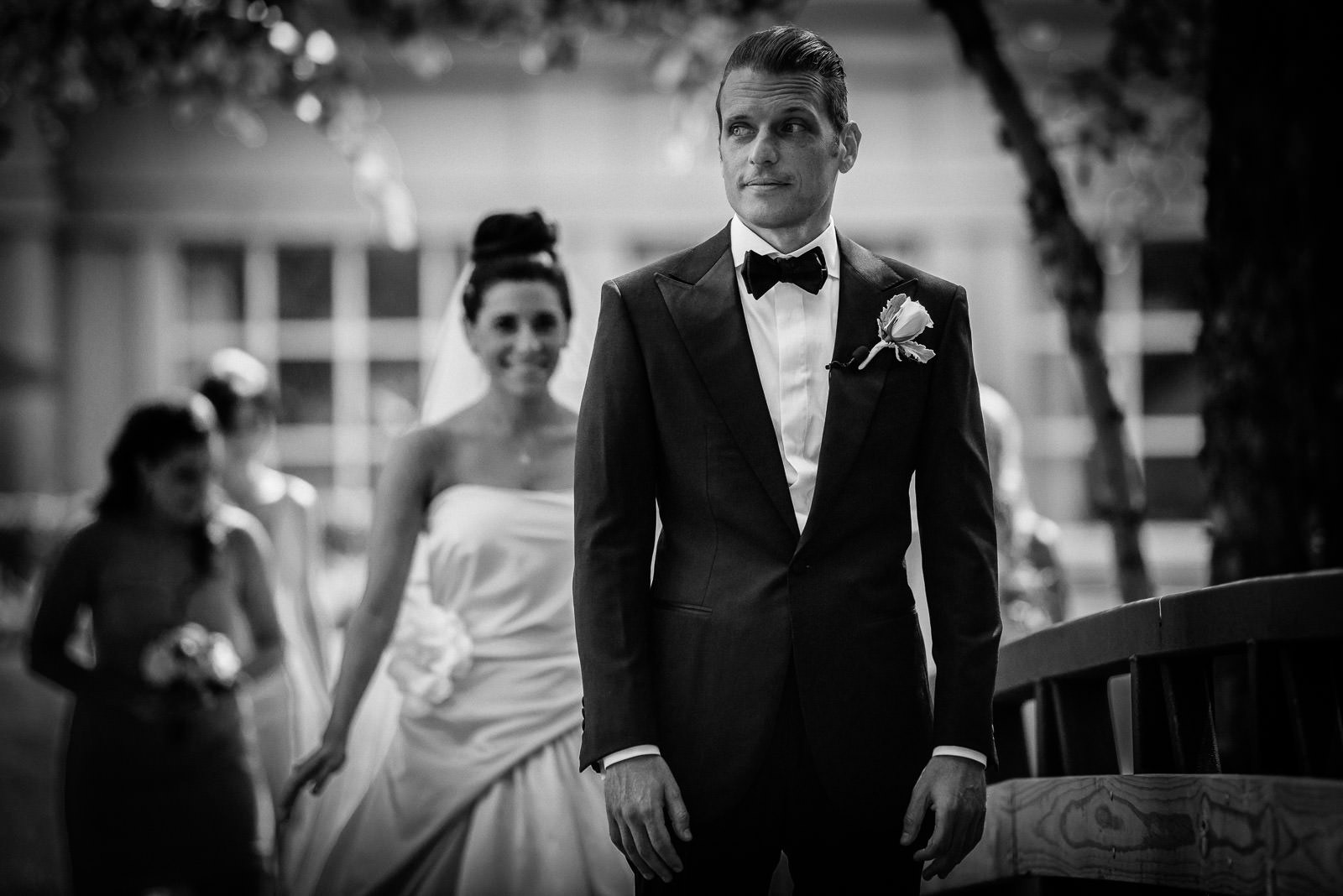
He hasn’t turned around yet. His eyes have slid as far over his shoulder as they can go without moving his head, his mouth is pressed flat, and his hands hang loose at his sides. Behind him, a little out of focus, she’s already smiling.
That frame is a good place to start explaining why black and white wedding photos never seem to age. I made it on a 200mm lens in 2014, and twelve years later nothing in it looks dated.
I’ve been a professional photographer for more than 30 years, and 20 of those years have gone into photographing weddings across Northern New Jersey and New York City. Couples almost always ask me some version of the same thing: will we wish we had it in color? Here’s how I actually think about it.
Why Black and White Wedding Photos Remove Distractions
Color is loud. A red exit sign, a green uplight on a church wall, a bridesmaid’s dress in a shade somebody picked off a swatch card: all of it pulls at your eye before you reach a face. Take the color out and what’s left is light, shape, texture, and expression.
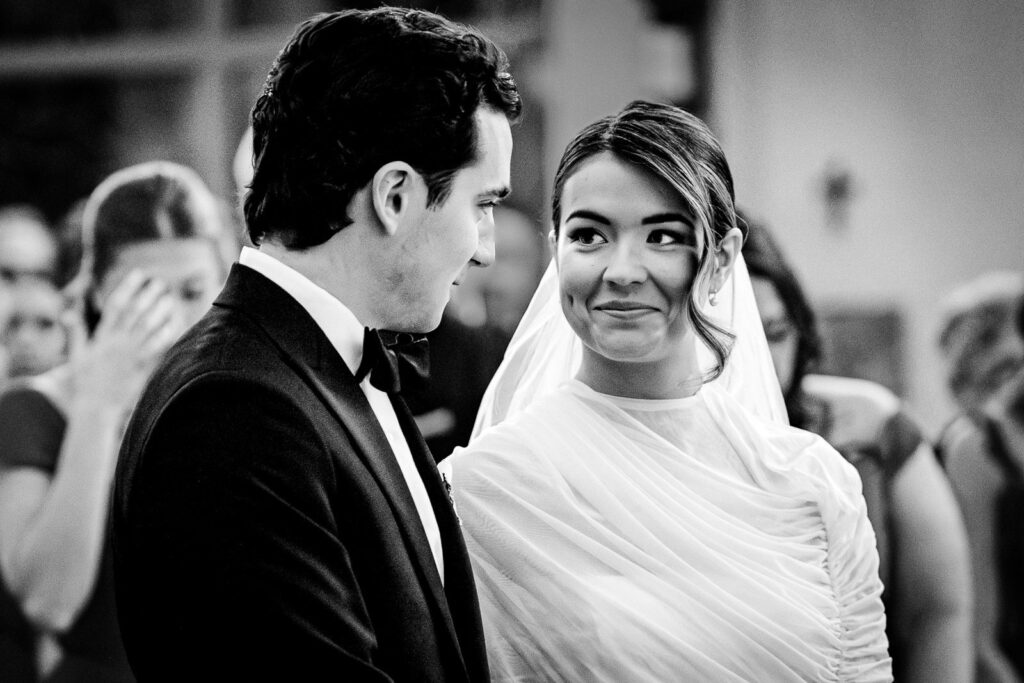
In this frame from St. Catharine Church in Glen Rock, she’s looking up at him and smiling, and in the row behind them a guest has a hand pressed to her face. It was made at ISO 25600 in a dim church, where color tends to turn skin muddy and black and white turns the grain into something that reads like film.
That’s the heart of black and white wedding photography for me, and you’ll see it throughout my wedding photography portfolio: real ceremonies, real light, nobody posed. It’s how I work as a documentary wedding photographer in New Jersey, and couples describe the results better than I can on our testimonials page.
I don’t convert everything, though. If color is telling you something, it stays. If it’s only noise, it goes.
Why Anticipation Often Feels More Emotional Than Reaction
Most people assume the big photograph is the reaction: the turn, the gasp, the hands flying up to the mouth. The seconds before the turn are often stronger, because nothing has resolved yet.
In the photograph at the top of this page, you can see it in his body. His chin is level, his shoulders are square, and only his eyes have moved, which is how people tend to stand when something is about to happen behind them.
She’s soft behind him, one hand lifting the side of her dress. Color would add the tuxedo, the leaves overhead, whatever the bridesmaid behind her is wearing, and none of it would help. In black and white it’s two people and a few feet of distance, and that’s the entire story.
The same thing happens in black and white first look wedding photos. The version I set up most often gives the person waiting nothing to do but wait, and I stay far enough back that both of them stop thinking about me. If you’re still deciding, here’s my honest breakdown of whether a first look is right for you.
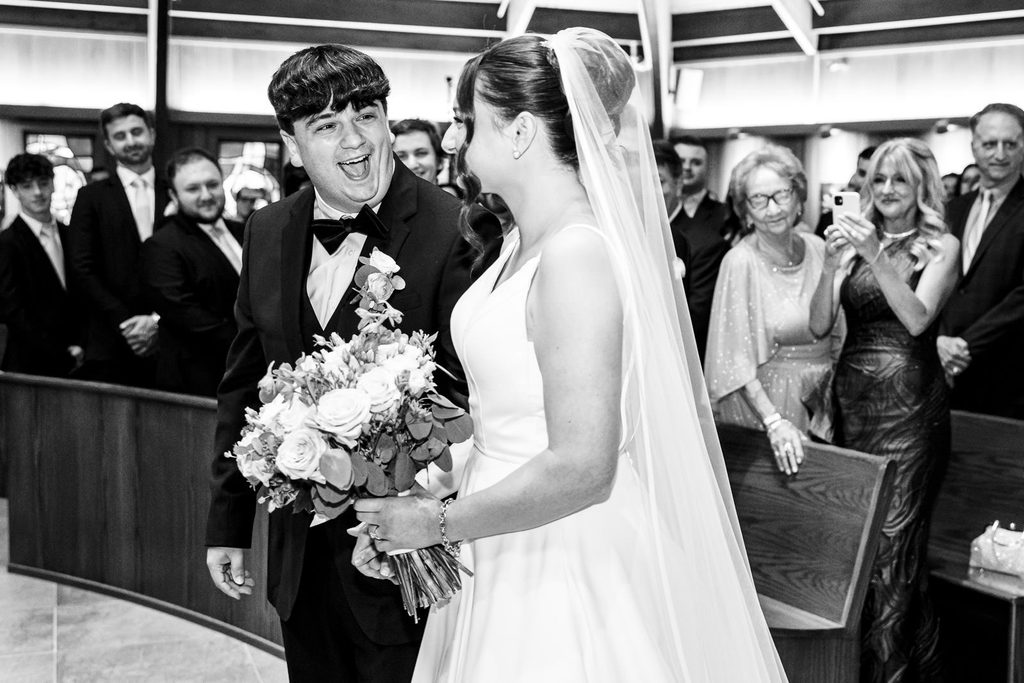
Reaction has its place too. At one summer wedding, the groom’s whole face opened up when his bride reached the front, mouth wide and eyes creased, while the front pew leaned in and someone held a phone up to catch it. The reaction is the answer. Anticipation is the question.
Why Some Wedding Photos Feel Timeless Decades Later
Trends date a photo faster than anything. With heavy filters and whatever color grade was everywhere that year, you can usually guess when an image was edited; a hand on a shoulder or a mouth trying not to cry reads the same in any decade.
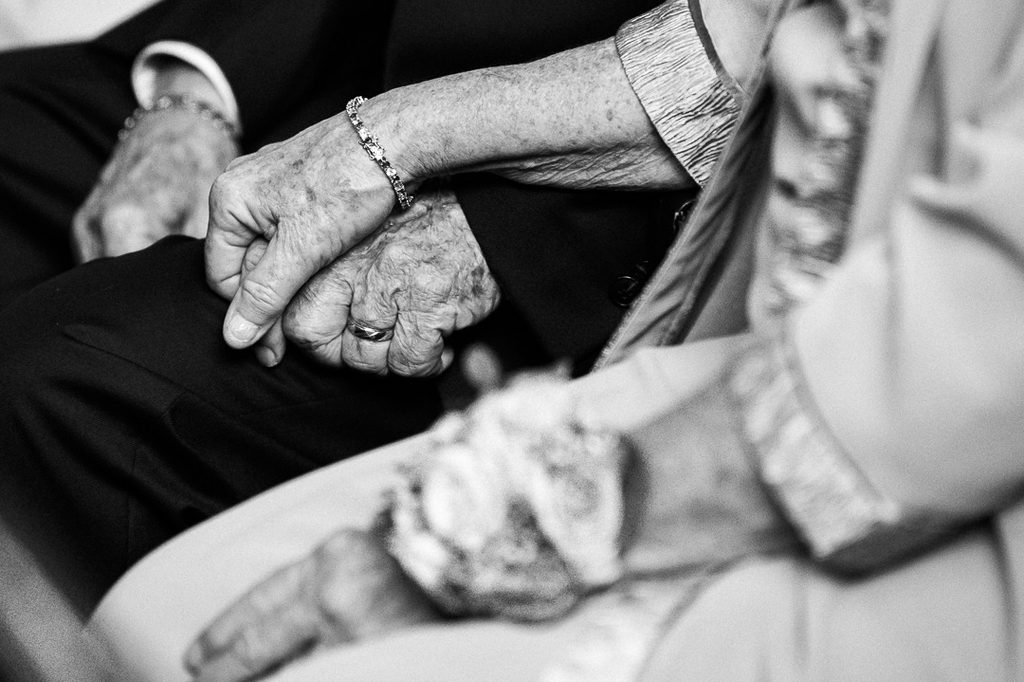
In this frame of grandparents during a ceremony, her hand is wrapped over his, a diamond bracelet on her wrist, his wedding band sitting on a weathered, spotted hand. I photograph moments like that from a distance on a long lens, because if you walk up close, people let go.
It could have been made in 1975 or this year, and that’s my test for timeless wedding photos: if you can’t tell what year it is, it’s going to hold.
How Cinematic Wedding Photography Enhances Emotional Storytelling
Cinematic, to me, means a frame that tells you where to look: something sharp, something soft, and a reason for both.
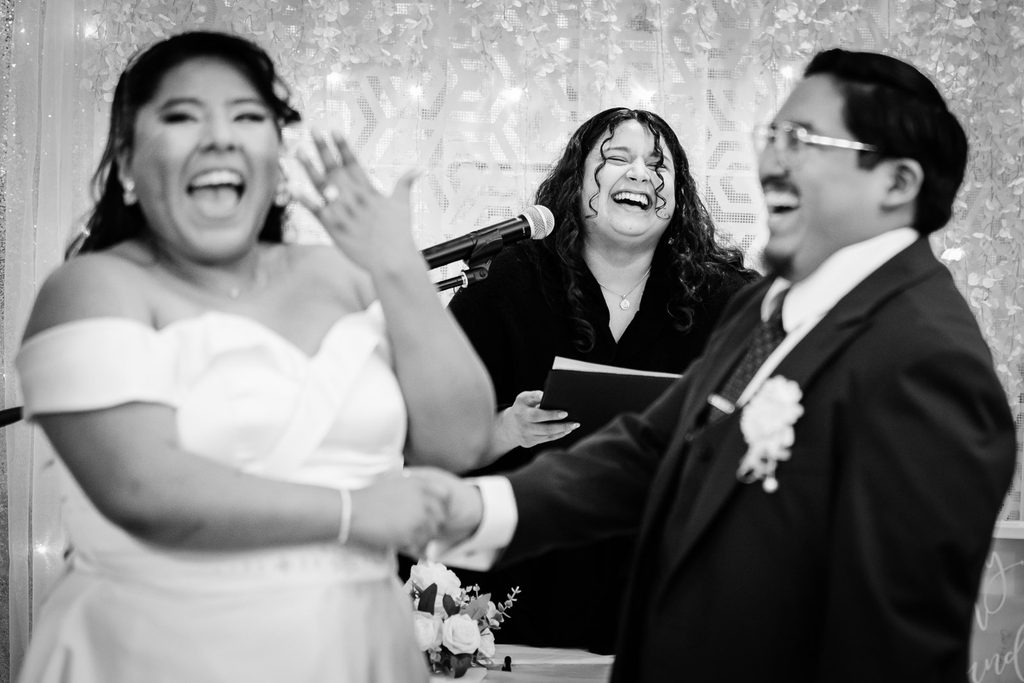
Sometimes emotional wedding photography comes down to what you choose to blur. During one ceremony the officiant broke up laughing along with the couple, so I focused on her and let the bride and groom go soft in the foreground, both mid-laugh. Nobody was posed; my job was to be standing in the right place with the right person in focus.
When Wedding Photos Work Best in Black and White
I decide frame by frame, but some moments land in black and white far more often than others.
First Looks
The waiting, the turn, and the first seconds after are carried by faces and hands. Shoulders drop, hands go to cheeks, and the background rarely adds anything.
Parent Reactions
When a father sees his daughter in the dress, what I watch is his jaw and his hands: the jaw sets, a hand goes to his mouth or his glasses. In black and white your eye goes straight to those details, which is why these show up so often in my work on emotional wedding photos before the ceremony.
Vows
Vows make people laugh and cry, sometimes in the same sentence, often under ceremony lighting that’s hard on skin tones. Black and white takes that problem off the table.
Emotional Embraces
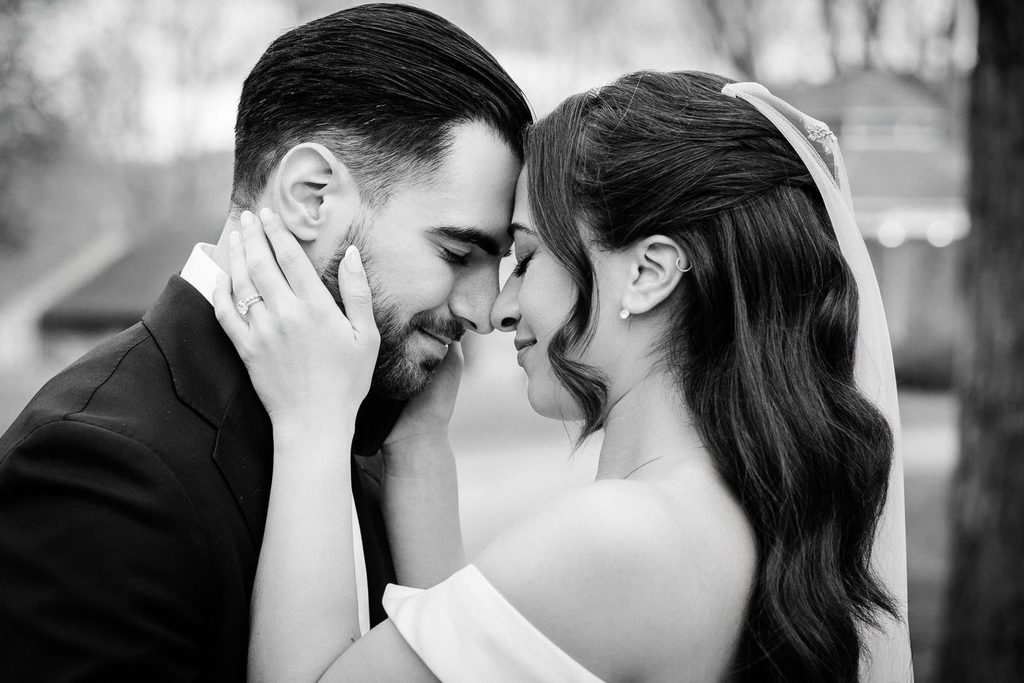
Foreheads together, eyes closed, her hands holding his face. At Waterloo Village this spring, the trees behind them went soft and gray, and all that was left was the small space between them.
Quiet Moments
Grandparents holding hands through the vows, like the frame earlier on this page. Moments like these are small wedding black and white pictures, and they’re the ones I’d least want a couple to lose.
Color still wins when it carries the story: a sunset, a garden in full bloom, a laugh so bright that black and white would make it more serious than it was. Most galleries I deliver are a mix, on purpose.
Questions Couples Ask About Black and White Wedding Photos
Should wedding photos be black and white?
Some of them, not all of them. Black and white works best for moments driven by emotion and expression, like first looks, vows, parent reactions, and quiet embraces, while color works better when it carries the story, like a sunset or a garden in bloom. A strong gallery mixes both, chosen frame by frame.
Are black and white wedding photos timeless?
Yes, more than almost any other style. Black and white wedding photos don’t carry the color grading trends of a particular year, so they rarely look dated. What they hold onto is expression, light, and gesture, and those read the same decades later as they did the week the gallery arrived.
Why do photographers use black and white for emotional moments?
Because removing color removes competition. Without a bright dress, busy decor, or mixed lighting pulling at the eye, attention goes straight to faces and hands. Black and white also helps in dim churches and venues, where high ISO noise and uneven light can turn color skin tones muddy.
What wedding moments look best in black and white?
First looks, vows, parent reactions, emotional embraces, and quiet in-between moments tend to look strongest, because they’re carried by expression rather than setting. Candid laughter during a ceremony and small details, like grandparents holding hands, also translate beautifully when color isn’t adding anything to the story.
Do black and white wedding photos go out of style?
No. Black and white has been part of wedding photography from the very beginning, and it has never really left. Color editing trends come and go every few years, but a well-composed black and white image of real emotion looks just as current twenty or thirty years later.
Planning a Wedding Where the Feeling Matters Most?
If you’re getting married anywhere from Bergen County to Manhattan to the Hudson Valley, and you care more about how your day felt than how it was posed, I’d love to hear about it. I’ll walk you through how I’d handle your ceremony, your light, and which moments I’d expect to end up in black and white.
Tell me what you’re planning, or call 201-834-4999 or 917-992-9097.
Reply...
The Calm Behind the Camera
About Me — But Really, It’s About You
The most meaningful wedding photos never come from stiff poses.
They come from the quiet laugh you didn’t think anyone saw.
The look on your partner’s face during the vows.
The warmth of your people all around you.
I’ve been doing this for over 30 years — and I still get nervous before every wedding.
Not because I’m uncertain, but because I know how much it matters.
After photographing hundreds of weddings over the past few decades, I’ve learned something simple:
The best photos happen when you feel fully present.
That’s why I work calmly, behind the scenes — guiding when it helps, then stepping back when the real moments unfold. I’m always anticipating what’s next, so you never have to think about a thing.
My goal is simple: to help you relax, feel confident, and walk away with photos that feel like you — not a filtered version of someone else’s idea of perfect.
Most of my couples say the same thing:
“We’re so glad we didn’t have to worry.”


trusted by over 800 couples In NYC & NJ you’re in great hands.
201-834-4999 | 917-992-9097
alex@alexkaplanweddings.com
Let’s Connect
alex@alexkaplanweddings.com
917-992-9097
I’d love to hear what you’re planning. I’ll personally reach out to learn more and see how I can help.


