

Should You Do a First Look Before Your Wedding Ceremony? The Pros, Cons, and What I Recommend

I’m Alex Kaplan, a wedding photographer and videographer based in New Milford, NJ, serving Northern NJ, NYC, and the Hudson Valley. For over 30 years, I’ve helped couples enjoy their day without feeling rushed, while I quietly capture the real moments, natural portraits, and genuine emotions you’ll still love decades from now.

Most couples ask me about the first look in the same breath as the timeline, which tells you something. They think they are asking a photography question. They are actually asking how they want the hours around their ceremony to feel.
First look wedding photos went from unusual to ordinary over the thirty years I have been photographing weddings across Northern New Jersey and New York City. That shift does not make them right for everyone. Plenty of the couples I work with choose one. Plenty walk the aisle having not seen each other first. I have never noticed one group enjoying their wedding more than the other.
So this is not a sales pitch for seeing each other early. It is the honest accounting: what you gain, what you trade, and how to tell which couple you are.
A first look is a prearranged moment before the ceremony when a couple sees each other for the first time on the wedding day. Most run twenty to thirty minutes and lead straight into couple portraits and wedding party photographs.
How private it stays is a choice, and mine is firm. I keep guests and the wedding party out of it, because a first look with fifteen people watching from a balcony is not a first look, it is a performance, and it photographs like one.
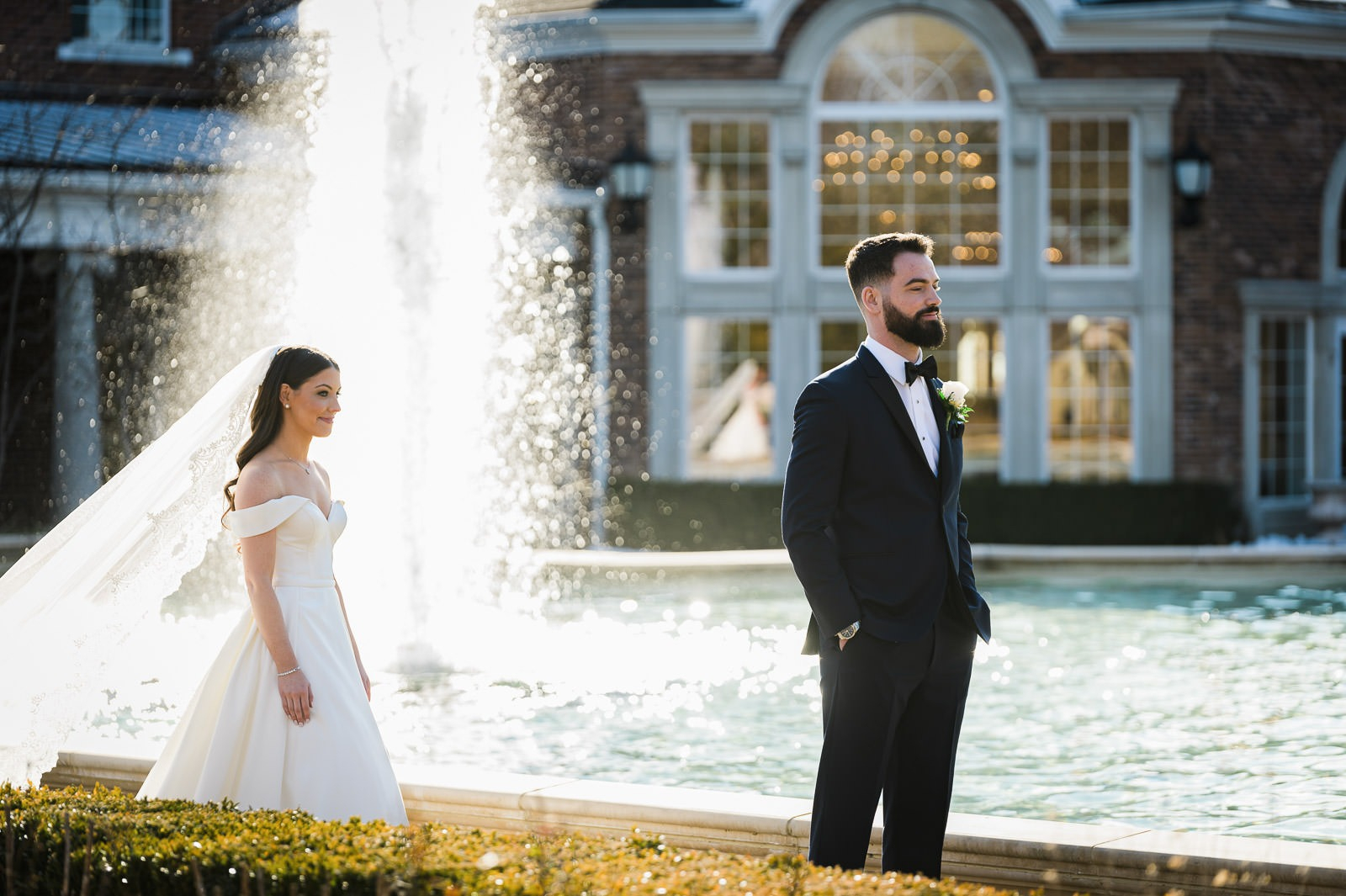
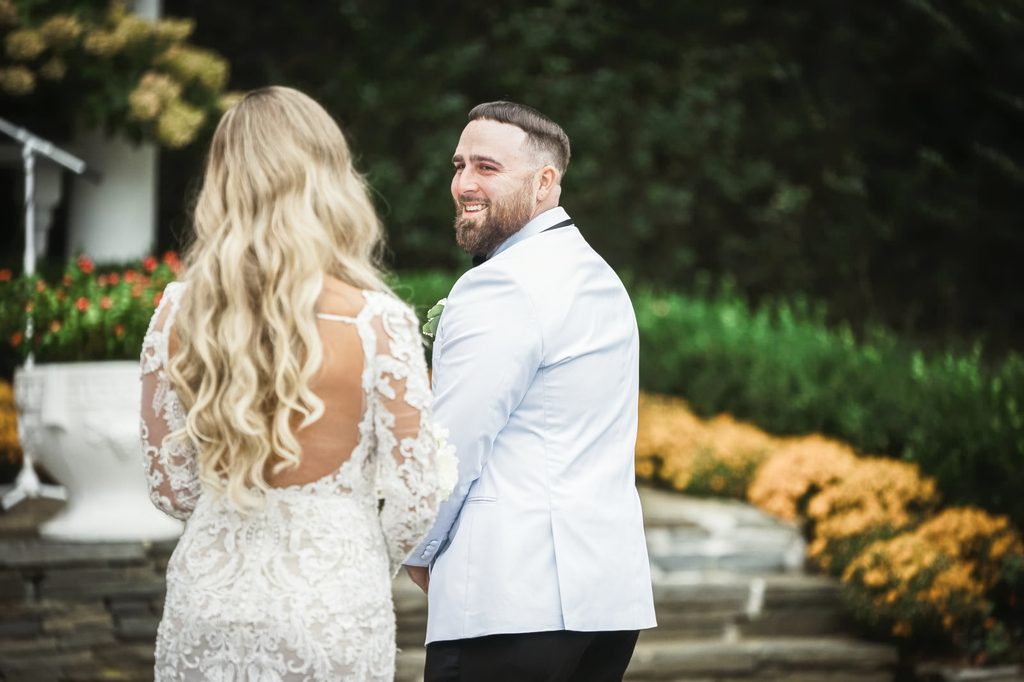
At a recent Brooklake Country Club wedding, a breeze caught Ilysse’s veil and wrapped it over James’s arm the second he turned around. He did not untangle it. He pulled her closer with the tulle still on his sleeve, and they stayed like that, talking quietly.
How this fits into the rest of your day is a scheduling question more than an emotional one, and our wedding day photography timeline guide maps the full sequence hour by hour. The approach I take during the moment itself is the same one I bring to the whole day as a documentary wedding photographer in New Jersey: stand far enough back that you get the moment before I get the photograph.
Here is the part nobody mentions at the venue tour. Without a first look, every couple portrait, every wedding party photograph, and every family grouping has to happen in the gap between your ceremony ending and your reception starting.
That gap is usually sixty to ninety minutes, and it is the same gap as cocktail hour. Something has to give, and it is almost always your time with your guests.
From where I stand, nerves seem to peak in the twenty minutes before the ceremony rather than during it. Couples who have already seen each other walk in carrying a different kind of energy.
I notice it most in the hands and the shoulders during the processional.
If being photographed is the part that worries you more than the vows, how to feel comfortable during wedding photos covers what actually helps, and almost none of it is posing.
This is the benefit I argue for hardest, and the one easiest to undervalue while you are still planning. When portraits are finished before the ceremony, cocktail hour is yours.
You eat something. You talk to the relatives and friends who travelled to be there. You are a guest at your own party for sixty minutes.
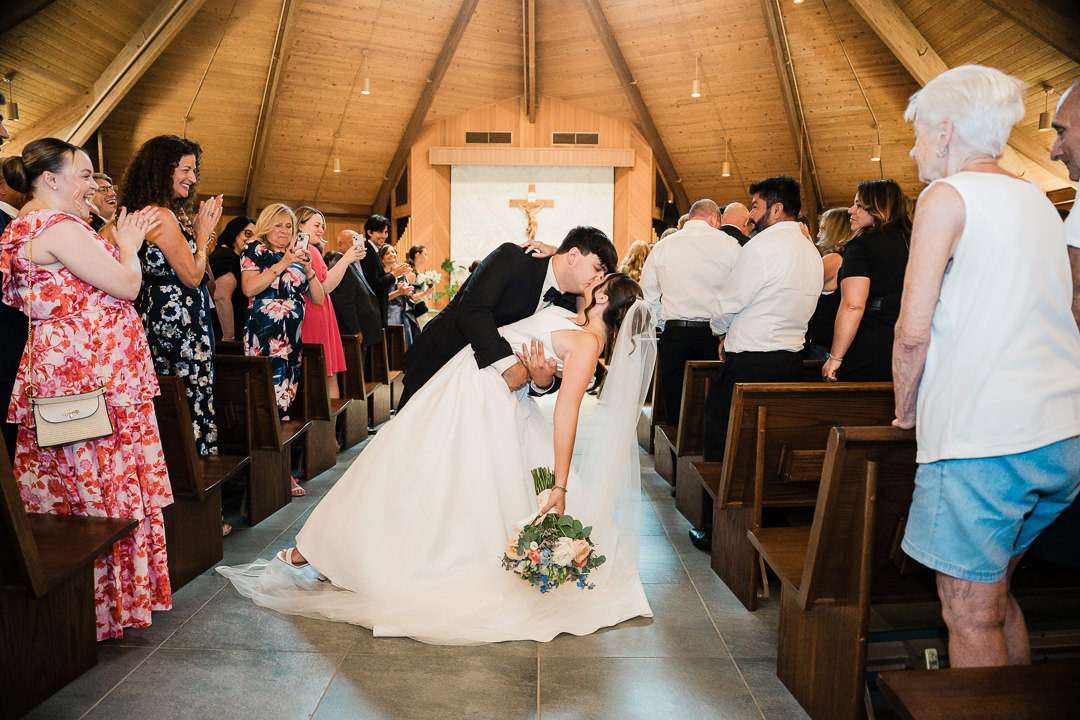
It does not disappear. It changes. The first sight is no longer the first sight, and for some couples that specific piece of tradition is the whole reason they are getting married in a church their grandparents were married in.
What replaces it is quieter and often longer, because you are looking at each other for the length of a processional instead of a half second.
If you already know that moment matters more to you than anything on this page, stop reading and skip the first look. That instinct is worth more than my scheduling argument.
A first look happens when it happens, which in a February wedding in Bergen County can mean flat afternoon light at three o’clock. The late-day light that photographs beautifully arrives after your ceremony, not before it.
I usually solve this by keeping a short portrait window open after the ceremony regardless. You do not have to choose one or the other.
If your ceremony starts at four o’clock in December, the useful light is gone before cocktail hour begins anyway. That argues for a first look rather than against one, which is why I ask for your ceremony time before I offer an opinion.
The first look is the first thing sacrificed when hair and makeup runs long, and hair and makeup runs long at most weddings I photograph. A first look asks your whole morning to hold to schedule, which is a real ask.
The fix is not discipline, it is buffer. I build extra time into the first look window so that a delay in hair and makeup does not immediately compress everything downstream of it.
I lean toward recommending a first look, with a caveat that matters more than the recommendation.
Lean toward a first look if:
Skip it if the tradition of the aisle is something you have pictured since you were a child. I have never once regretted telling a couple to protect that.
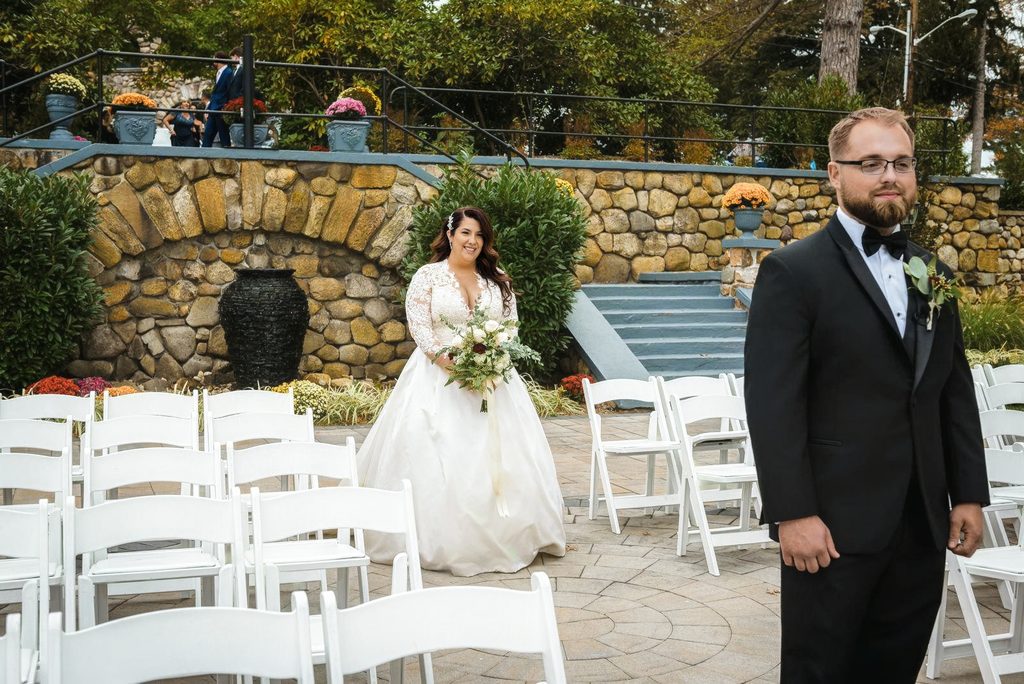
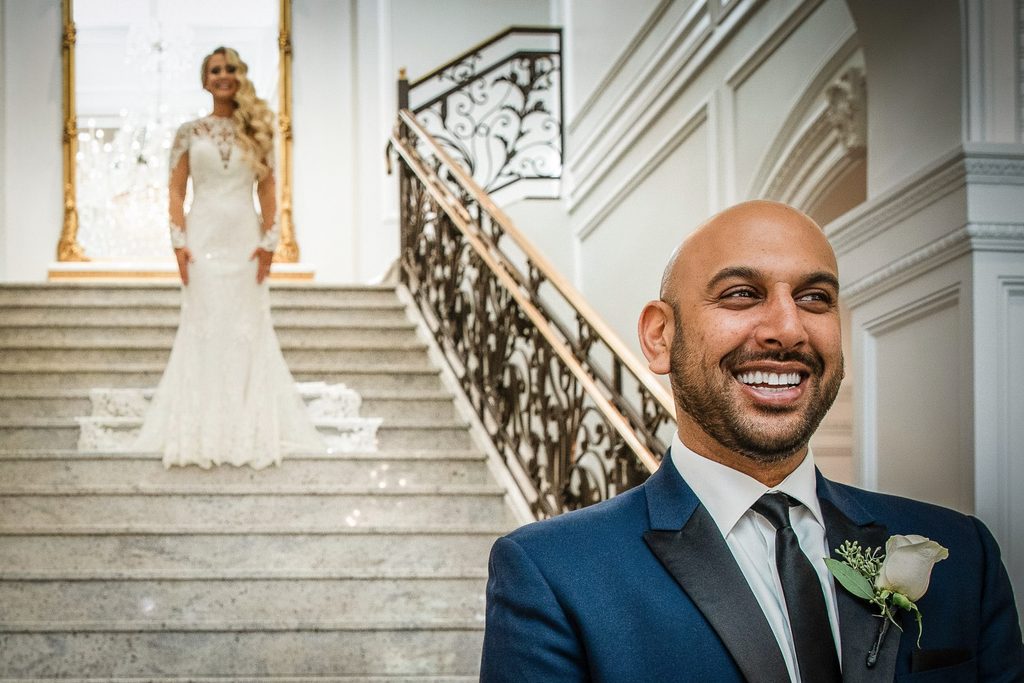
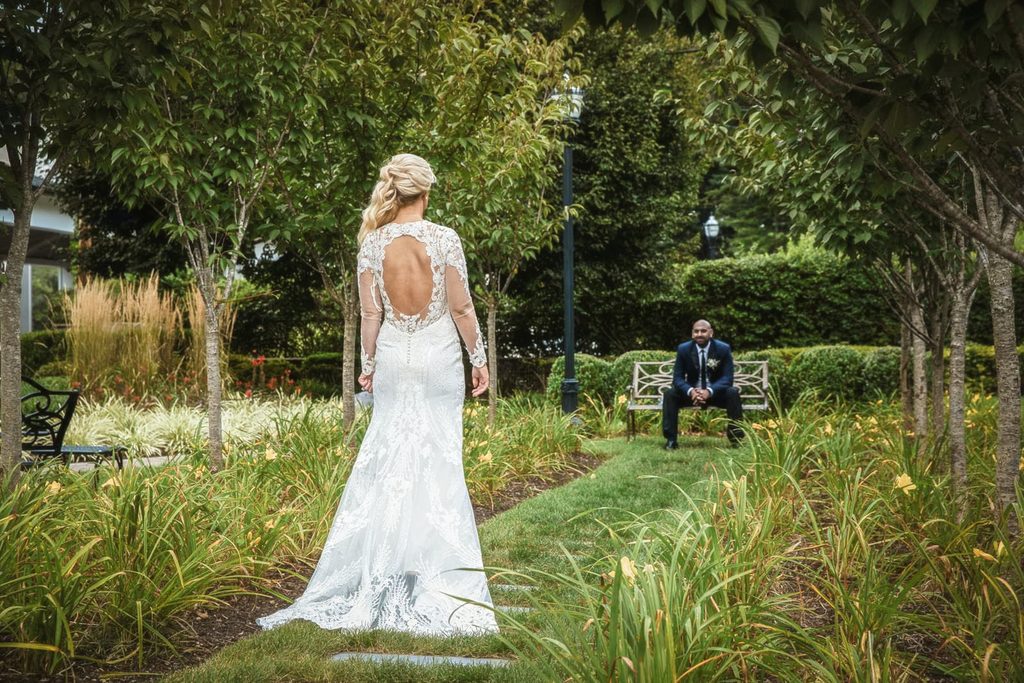
The version I set up most often gives the person waiting nothing to do except wait. A garden path, a staircase, an empty ceremony space, and thirty or forty feet of distance.
The distance is the whole point. It gives the approaching partner time to stop performing, and it gives me the seconds before the turn, which are frequently better than the turn itself.
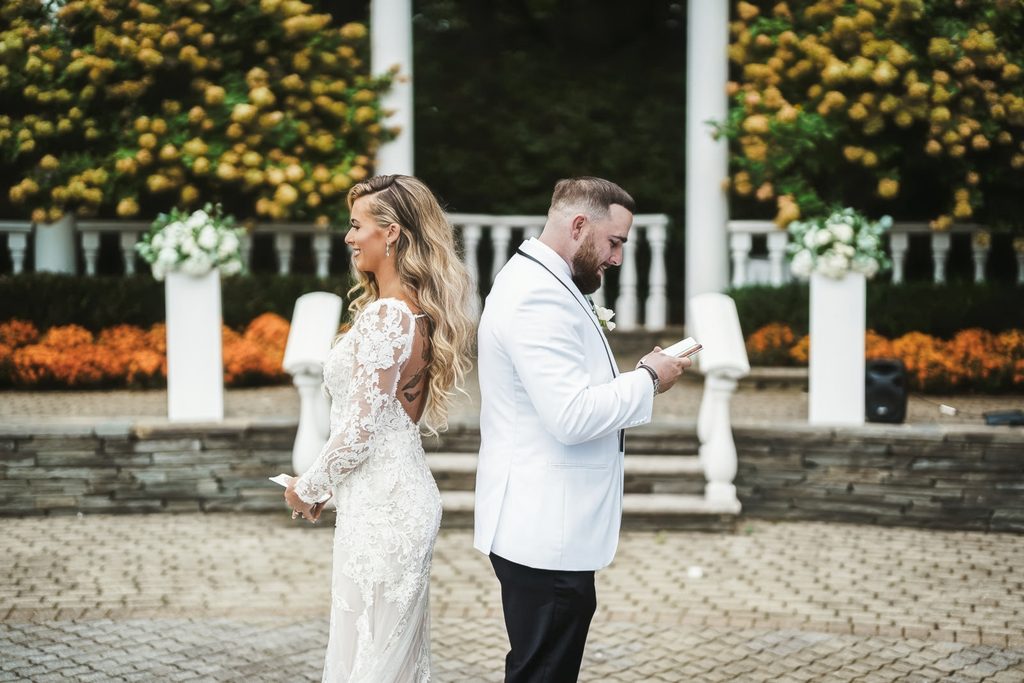
Some couples read private letters or vows to each other before either one turns around. They stand back to back, read, and only then see each other.
It solves a real problem. Couples who worry they will not know what to do with the moment suddenly have something to do with it, and the reading carries the emotion the turn was supposed to manufacture.
A first look does not have to be with your partner. A private moment with a father or mother twenty minutes before guests are seated produces some of the most honest frames of the day, and our piece on emotional wedding photos before the ceremony covers that window in depth.
More of this work, first looks included, sits in the wedding photography portfolio.
Budget 45 minutes total. That covers roughly 20 minutes for the first look itself and the couple portraits immediately after, plus 25 minutes for wedding party photographs while everyone is already assembled and dressed. Add 15 minutes if your venue requires a walk to reach the location.
No, though it does change it. What I see is a processional that reads as anticipation rather than bracing, because the hardest nerves have already been spent. You still see each other across a room full of people who love you, and that does not stop landing.
Work backward from your ceremony, not forward from getting ready. For a first look followed by couple and wedding party portraits, I usually want to start about 90 minutes before the ceremony. Add more if we are also doing family photographs or travelling between locations.
Yes. Lobbies, staircases, and empty ceremony rooms all work, and some of the strongest frames I have made came from indoor first looks. Venues like The Rockleigh in Bergen County offer both, with gardens and ballroom spaces available. Indoor first looks also remove weather from the decision entirely.
If you are weighing a first look and want someone to walk through your specific timeline, venue, and light before you commit either way, that is a conversation I am happy to have.
I photograph weddings across Northern New Jersey, New York City, and the Hudson Valley, and I have spent thirty years learning when to step in and when to stay back. Get in touch and tell me what you are planning.
About Me — But Really, It’s About You
The most meaningful wedding photos never come from stiff poses.
They come from the quiet laugh you didn’t think anyone saw.
The look on your partner’s face during the vows.
The warmth of your people all around you.
I’ve been doing this for over 30 years — and I still get nervous before every wedding.
Not because I’m uncertain, but because I know how much it matters.
After photographing hundreds of weddings over the past few decades, I’ve learned something simple:
The best photos happen when you feel fully present.
That’s why I work calmly, behind the scenes — guiding when it helps, then stepping back when the real moments unfold. I’m always anticipating what’s next, so you never have to think about a thing.
My goal is simple: to help you relax, feel confident, and walk away with photos that feel like you — not a filtered version of someone else’s idea of perfect.
Most of my couples say the same thing:
“We’re so glad we didn’t have to worry.”


trusted by over 800 couples In NYC & NJ you’re in great hands.
201-834-4999 | 917-992-9097
alex@alexkaplanweddings.com
I’d love to hear what you’re planning. I’ll personally reach out to learn more and see how I can help.


