

How to Plan a Surprise Proposal That Feels Natural, Personal, and Beautifully Photographed

I’m Alex Kaplan, a wedding photographer and videographer based in New Milford, NJ, serving Northern NJ, NYC, and the Hudson Valley. For over 30 years, I’ve helped couples enjoy their day without feeling rushed, while I quietly capture the real moments, natural portraits, and genuine emotions you’ll still love decades from now.

Most people who call me about a proposal describe their plan, and then they apologize for it.
They have spent a week looking at surprise proposal ideas NJ couples post online, and somewhere between the rented marquee letters and the drone footage, their own idea started to feel small. It usually is not small. It is quiet, and quiet does not perform well on a feed.
I have photographed more than 500 proposals across Northern New Jersey and the New York City metro area over the past 30 years. The photographs couples email me about years later are almost never the ones with the biggest production behind them.
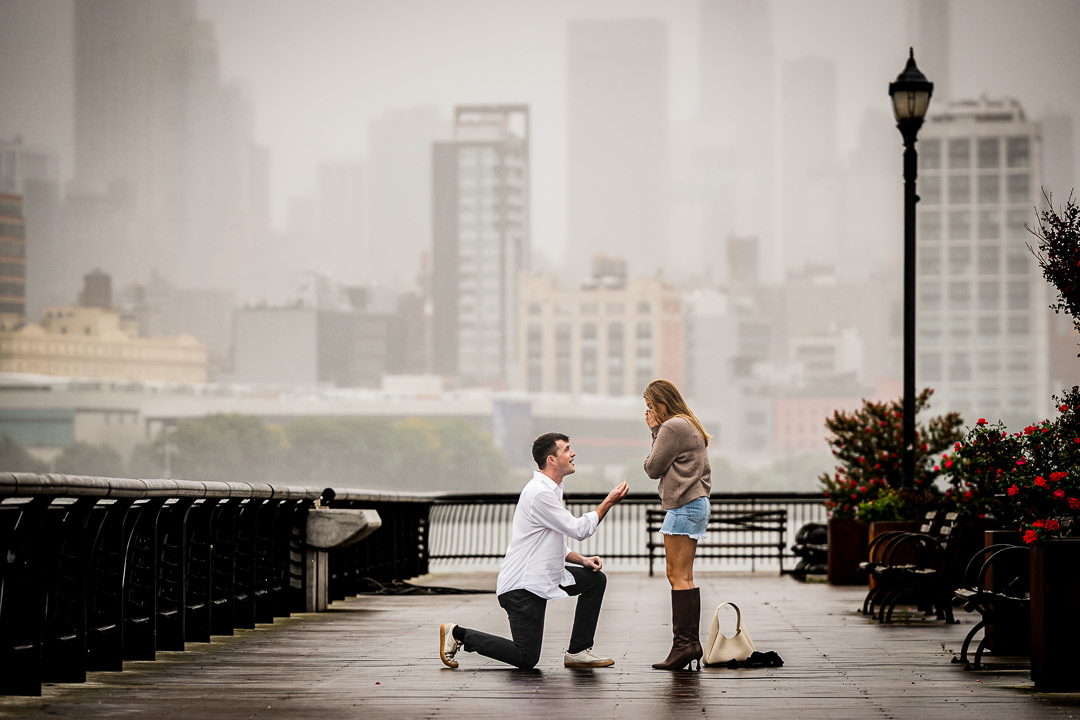
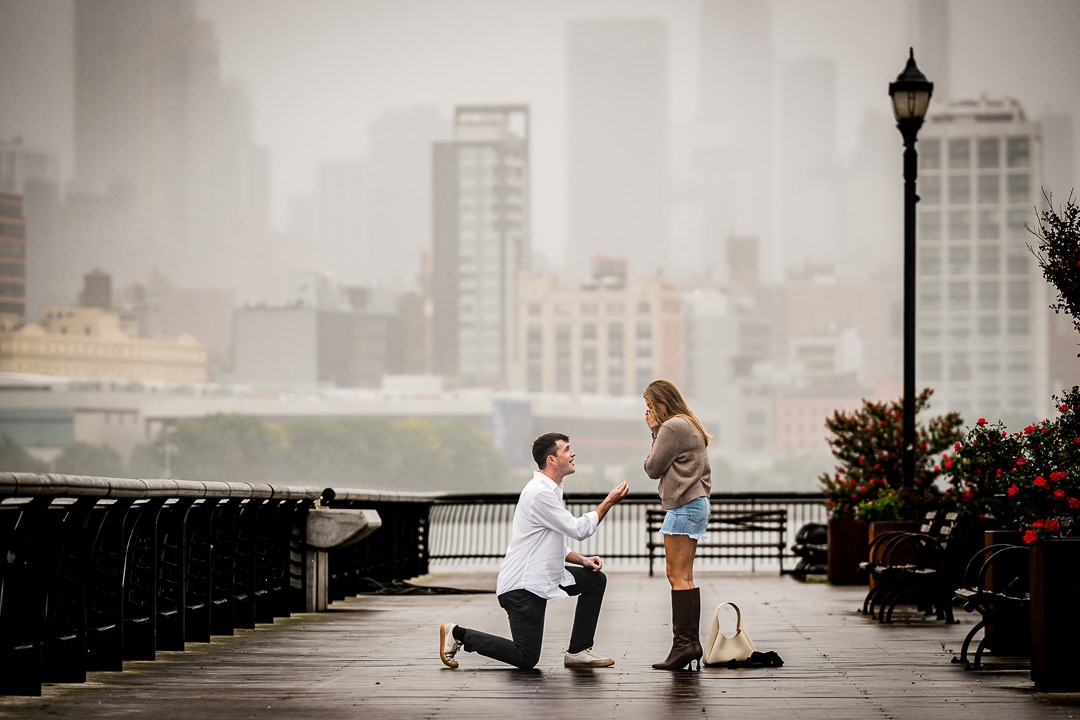
They are the frames nobody could have directed. A shoulder dropping. A hand already moving toward a face that has started to come apart. Two people who have stopped registering anything outside a three foot radius.
This guide is built around one idea: plan enough that the surprise works, and then stop.
A proposal photograph has one job. It has to look like the two of you, on that day, in that light, actually feeling it.
Staging works against that job in a specific way. The second a person suspects they have walked onto a set, their face begins managing itself, and a managed face reads as managed in every frame that follows.
Real reactions arrive in layers. Confusion, then recognition, then whatever has been sitting underneath. That sequence runs three or four seconds, and it is the most photographable thing that will happen all day.
You can see how that plays out across my proposal and wedding portfolio. The couples who end up with photographs they love are the ones who plan the logistics hard and leave the emotion completely alone.
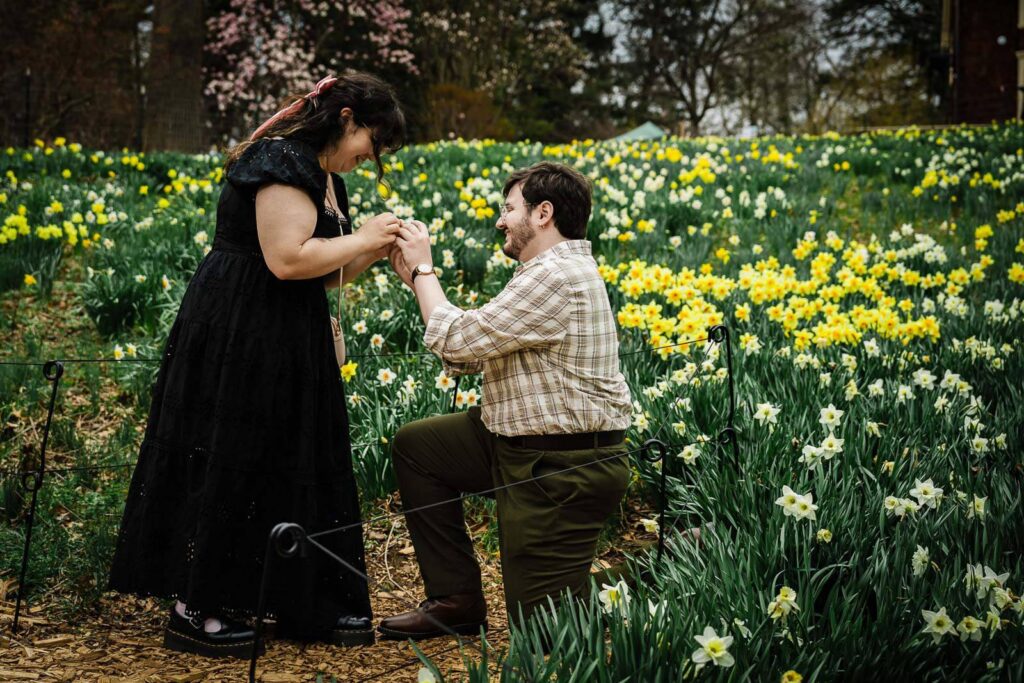
The strongest surprise proposal ideas NJ couples bring me share one trait. The place already meant something before the ring entered the picture.
A garden you walk every October. The pier where you stayed out talking until it got cold. The bench outside the restaurant from your first date.
Here are the shapes these plans usually take:
If you are still weighing where to ask, start with my guide to the best places to propose in Northern New Jersey, then come back here for the part that happens after the location is settled.
Familiarity does something for your partner that no installation can buy. It lowers their guard, which is exactly what you need in the ninety seconds before you ask.
It also solves a problem most people never think about. A place you already know is a place you can walk without checking your phone, and your partner will notice if you are navigating.
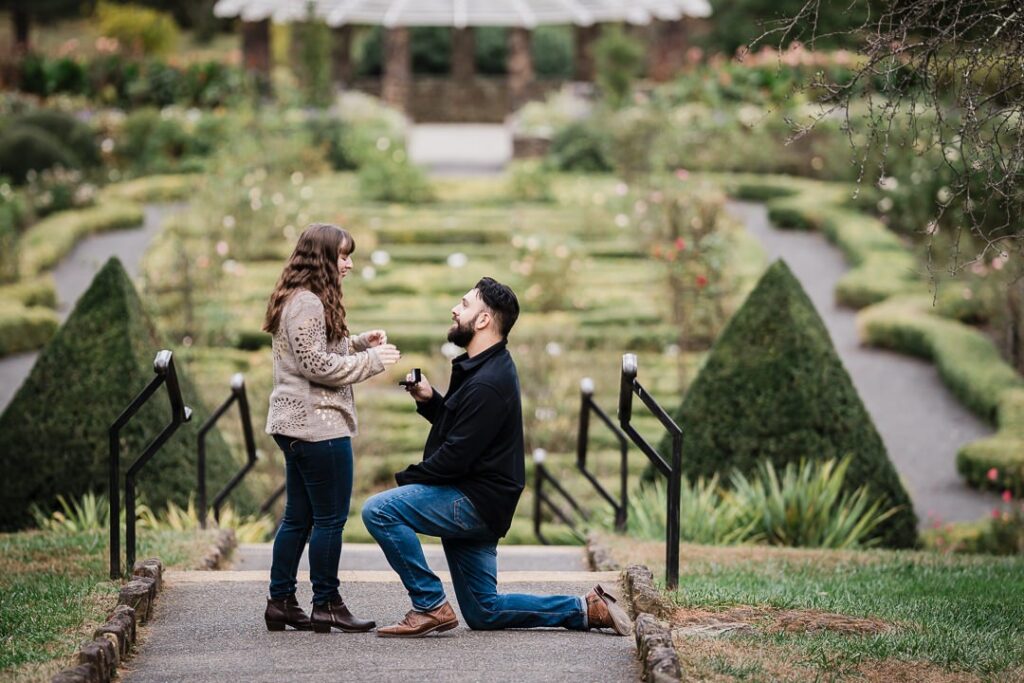
A simple proposal is not an unplanned proposal. It is one where the planning has become invisible by the time your partner arrives.
Most of that work belongs three to four weeks out: the route, the cover story, the arrival time, and the cue that tells me you are about to move. My 30-day proposal planning timeline breaks that down week by week if you want a framework to follow.
The cover story matters more than people expect. It needs to be dull enough that your partner does not dress for an occasion, and specific enough that they do not suggest a different plan on the way out the door.
Then protect it. Shared calendars, shared photo libraries, and group chats have ruined more surprises than bad weather ever has.
One personal element is worth more than five rented ones. A phrase only the two of you use, a song, a letter you wrote, a reason this particular place matters.
Choose it with a simple test: would it mean anything to a stranger? If the answer is no, it is the right detail.
Gardens give you structure. Hedges, pathways, and pavilions frame a couple without anyone arranging them, which is why Montclair and Middletown come up so often in these conversations.
Waterfront locations give you scale. A skyline behind you does in one frame what a decorator would need an afternoon to build.
Both come with the same trade. These are public places, and public means other people, which shows up in photographs as strangers in your background at the worst possible second.
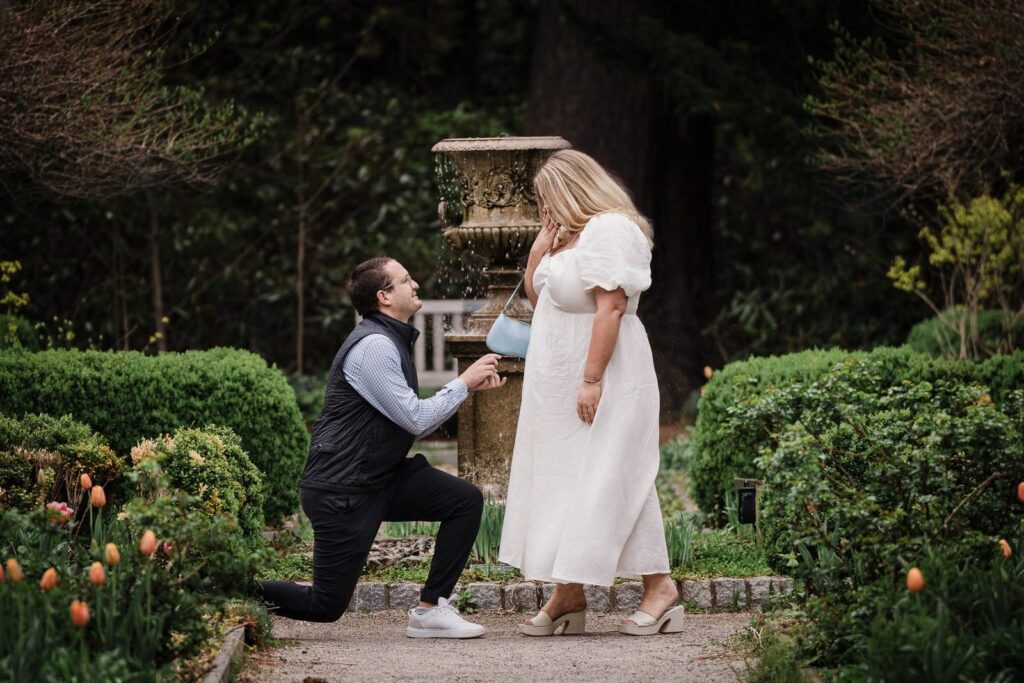
Permits sound like paperwork. What they buy is predictability, not privacy, and the difference is worth understanding before you plan around it.
Van Vleck House and Gardens in Montclair requires a reservation, an approved permit, and prepayment at least two weeks ahead. The Montclair Foundation photography page lists the current terms, including the rule that the gardens stay open to the public throughout your session and that your session cannot interfere with anyone else’s access.
So a permit locks your location and your time slot. Keeping strangers out of the frame is still a matter of which hour you choose, which direction you face, and where I position myself.
Several New Jersey state parks require special use permits with far longer lead times, so confirm your location’s rules before you commit to a date.
My job on a proposal is to be in position twenty minutes early and then disappear. You should not see me, and neither should your partner.
That usually means shooting from distance on a long lens, from an angle that reads as scenery rather than a photographer. It also means we agree on a cue in advance, because I cannot ask you to repeat anything.
If you want the full picture of how the planning and coverage work together, that is laid out on my proposal photography page.
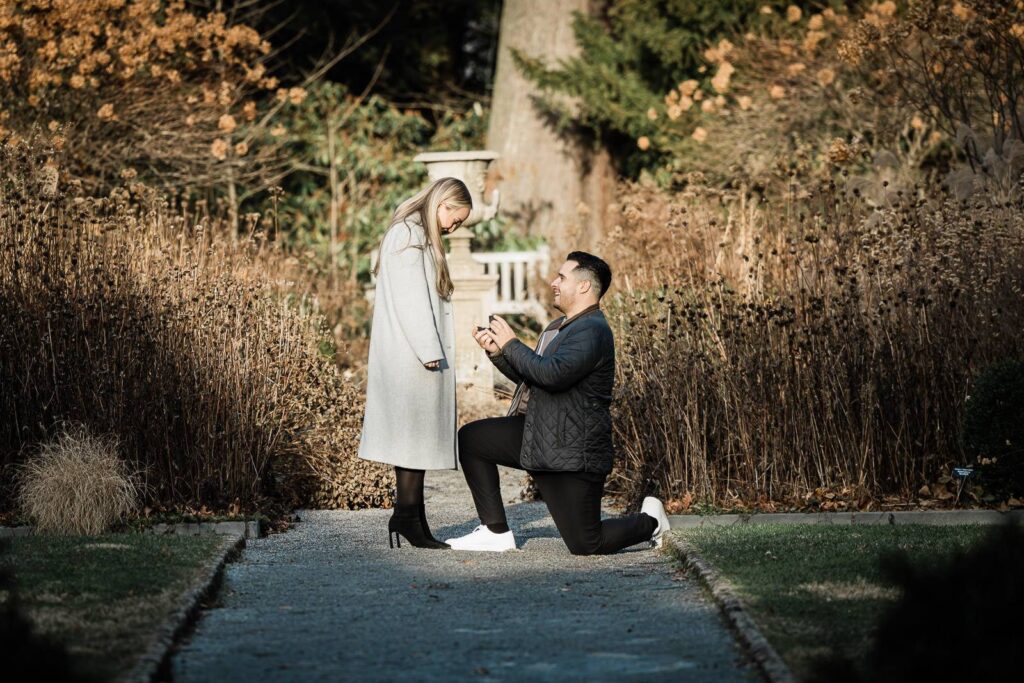
The practical translation is simple. Face the direction we agreed on, slow down when you drop, and stay down a beat longer than feels natural.
After she says yes, do not look for me. Look at each other, stay where you are for a minute, and let the reaction finish before anyone starts organizing anything.
The most common one is speed. People rehearse the words and then deliver them in four seconds, and a four second proposal is very hard to photograph well.
The second is crowding. Family hiding in the bushes can be wonderful, and it can also turn a private moment into a performance before your partner has processed the question.
The third is stopping the plan at yes. The calls to parents, the first close look at the ring, the walk to dinner: that hour is often where the best photographs live.
I have written a longer breakdown of the most common surprise proposal mistakes if you want the detailed version.
None of this rules out a real setup. Flowers, candles, and signage can be genuinely beautiful when they reflect something true about the couple, and when the venue permits them.
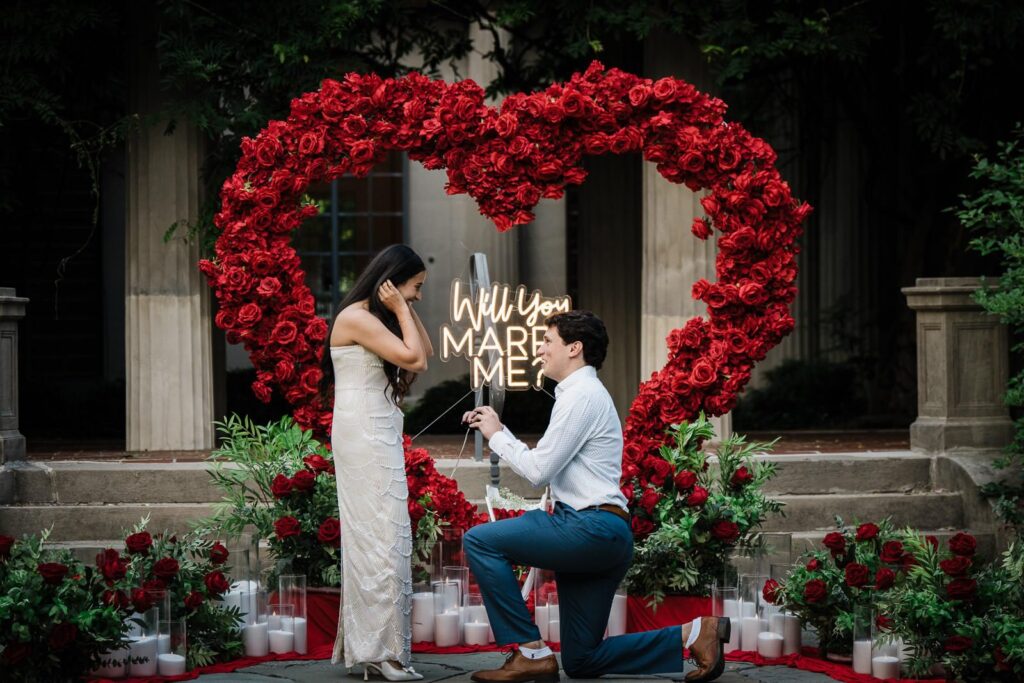
Keep the setting ordinary and the planning invisible. Choose somewhere you already go, give your partner no reason to dress for an occasion, and resist adding elements that announce themselves. The surprise does the emotional work. Anything that hints at a production undercuts it before you kneel.
It depends on the property and on whether a professional photographer is present. Van Vleck in Montclair requires a reservation and an approved permit with prepayment two weeks ahead. Some state parks need special use permits months in advance. Confirm the rules before you fix a date.
Tell as few people as the plan genuinely requires. Every additional person is another chance the surprise leaks through a group chat, a shared calendar, or a well-meaning comment. If family will be involved afterward, brief them on timing only, not on the moment itself.
Nothing. Stay where you are, look at each other, and let it land before anyone reaches for a phone. That minute is usually where the strongest photographs come from, and it disappears the moment someone starts organizing the group or calling relatives.
Gardens give you natural framing and a sense of enclosure, which suits couples who want something intimate. Waterfronts give you scale and a recognizable skyline. Neither is better. Choose whichever matches how the two of you actually spend time together.
If you are proposing somewhere in Northern New Jersey, New York City, or the Hudson Valley, and you want the moment to feel like yours instead of like a production, I would like to help you think it through.
We will talk through timing, the route, where I hide, and what happens after she says yes. Most of the work happens before the day, and most of it is invisible by the time it matters.
You can get in touch here, or call or text 917-992-9097. Tell me what you are picturing, and I will tell you honestly whether it will work.
About Me — But Really, It’s About You
The most meaningful wedding photos never come from stiff poses.
They come from the quiet laugh you didn’t think anyone saw.
The look on your partner’s face during the vows.
The warmth of your people all around you.
I’ve been doing this for over 30 years — and I still get nervous before every wedding.
Not because I’m uncertain, but because I know how much it matters.
After photographing hundreds of weddings over the past few decades, I’ve learned something simple:
The best photos happen when you feel fully present.
That’s why I work calmly, behind the scenes — guiding when it helps, then stepping back when the real moments unfold. I’m always anticipating what’s next, so you never have to think about a thing.
My goal is simple: to help you relax, feel confident, and walk away with photos that feel like you — not a filtered version of someone else’s idea of perfect.
Most of my couples say the same thing:
“We’re so glad we didn’t have to worry.”


trusted by over 800 couples In NYC & NJ you’re in great hands.
201-834-4999 | 917-992-9097
alex@alexkaplanweddings.com
I’d love to hear what you’re planning. I’ll personally reach out to learn more and see how I can help.


