
Your wedding day should feel relaxed, joyful, and completely yours.
I’m Alex Kaplan, a wedding photographer and videographer based in New Milford, NJ, serving Northern NJ, NYC, and the Hudson Valley. For over 30 years, I’ve helped couples enjoy their day without feeling rushed, while I quietly capture the real moments, natural portraits, and genuine emotions you’ll still love decades from now.
Browse by Category:
WEDDINGS
Browse by Venue:
view more

REQUEST INFORMATION
Want to feel like THIS on your wedding day?
Availability is limited. Check Your Date Here
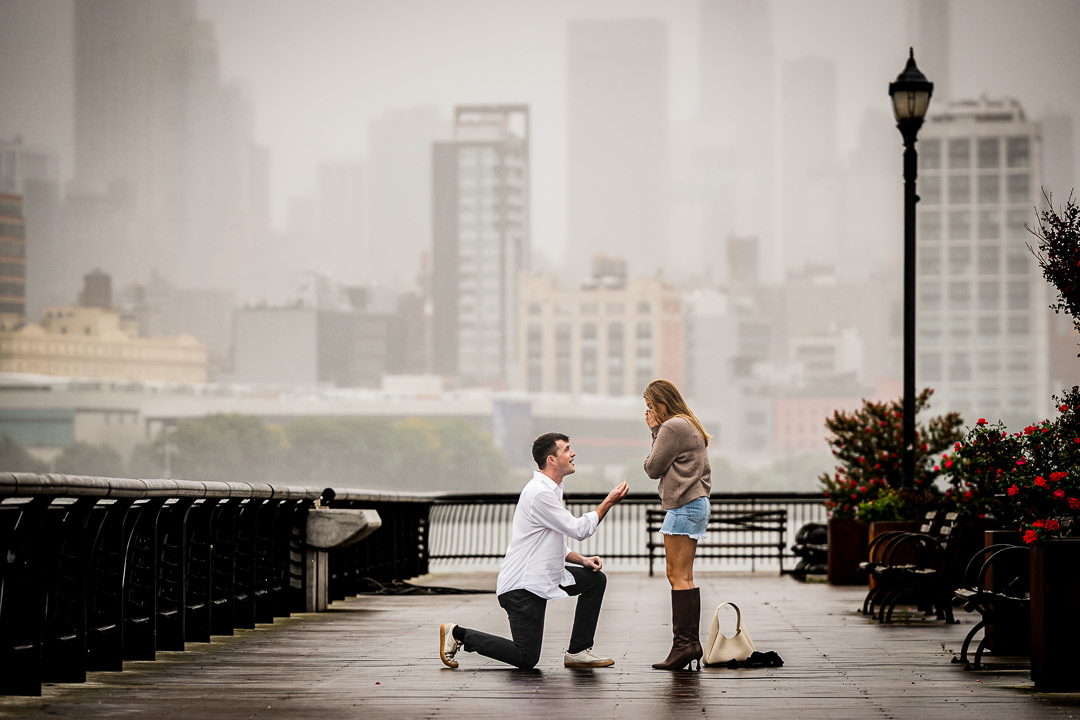
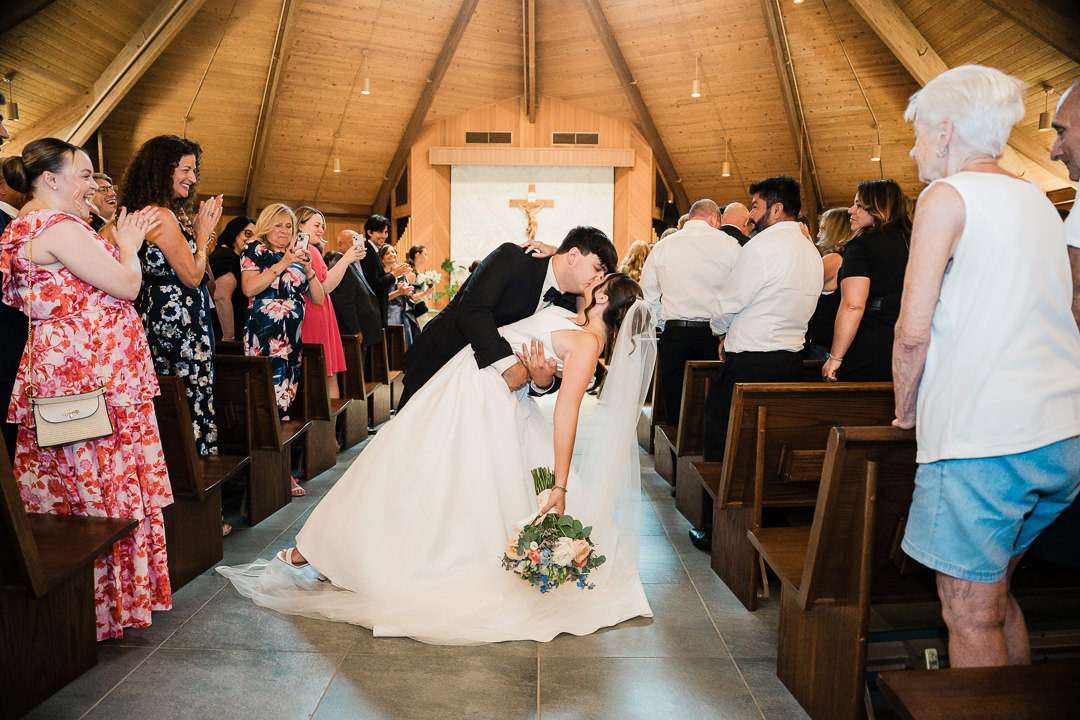


There is a stretch of the wedding day that couples often leave surprisingly little room for. It happens in a quiet suite, an hour or so before anyone lines up at the aisle.
The most emotional wedding photos before the ceremony are not always photographs of the couple together. They may be a father seeing his daughter dressed for the first time, a grandfather holding her arm, or a mother taking a quiet moment before the room fills.
I have been photographing weddings across Northern New Jersey and the NYC metro area for more than thirty years. If you want a sense of how these hours look across a full day, my wedding photography portfolio is the quickest way to see it.
Why Emotional Wedding Photos Before the Ceremony Feel So Personal
Emotional wedding photos before the ceremony feel personal because the room is smaller and quieter than it will be all day. Guests have not arrived, the schedule has not tightened, and the people closest to you have space to react without an audience.
Once the ceremony begins, a roomful of people is watching. That does not make anyone less sincere, but it does change how a room behaves.
The hour before is different. A father seeing his daughter in the dress for the first time is rarely prepared for it.
Suite access can vary considerably among Northern New Jersey wedding venues, so it is worth checking when the getting-ready room becomes available before you finalise the timeline.
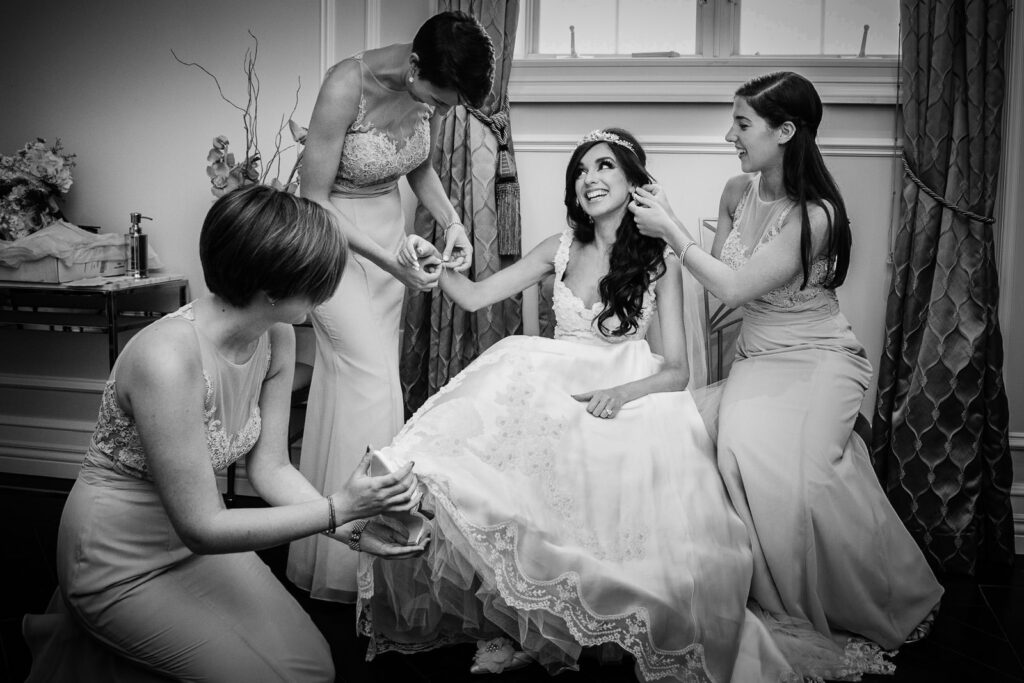
Wedding getting ready photography is often sold as detail shots: rings on a windowsill, the dress on a hanger, a champagne toast. Those details help complete the story, though the photographs that carry the most emotion are usually the interactions happening around them.
When a Father and a Grandfather Share the Same Moment
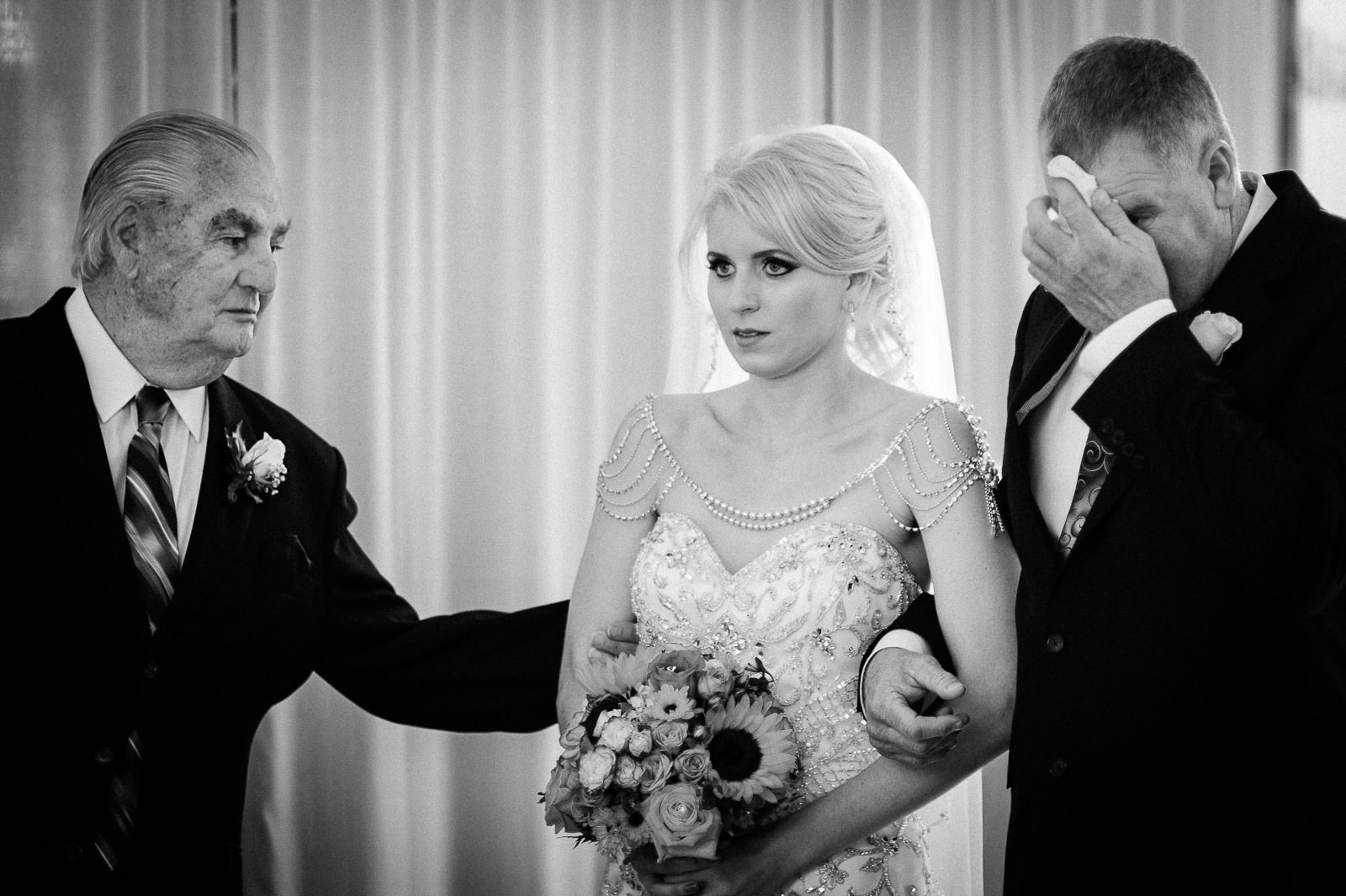
One photograph makes the case better than a paragraph can. A bride stands between two men, her grandfather on one side and her father on the other, in the minutes before the doors open.
Her grandfather has a hand on her arm. Her father is turned slightly away, a handkerchief pressed to his eyes.
She is looking straight ahead, holding her bouquet. The frame is unforced, and the point of being ready early is that a moment like this never has to be interrupted.
That is the argument for grandfather wedding photos in a single image. Formal portraits still matter, though photographing grandparents before the ceremony lets their part in the day feel more personal and more active.
In the pre-ceremony window they are participants rather than props. Moments like this one pass quickly, which is why someone has to already be in position.
Why Documentary Wedding Photography Captures Real Emotion
A documentary wedding photographer in NJ works on a simple premise: the moment is already happening, and my job is to be positioned for it rather than to manufacture it. I have written more about why documentary wedding photography feels more real, so this section stays on the pre-ceremony hour.
Directed photography has a place. Family formals need organizing, and portraits of the two of you deserve real attention.
But you cannot direct a grandfather into genuine tenderness. You can only be in the room, close enough to see it and far enough back that nobody adjusts their behavior because of you.
Candid wedding photography in NJ tends to get described as “just standing there.” In practice it is anticipation work. I watch hands, doorways, and the pause after someone says something meaningful, because that pause is where father of the bride wedding photos actually live.
Most of the strongest family wedding moments happen in plain view and are easy to miss in real time. That is the value of the archive: it holds details you may never have seen yourself.
Black and White Can Make Emotional Photos Even Stronger
Black and white wedding photography is not a filter decision for me, it is an editing judgment about what a picture is actually about. When color competes with feeling, color loses.
In a getting-ready suite you often have hotel carpet, a red exit sign, mismatched robes, and a bouquet that pulls the eye straight off a face. Strip the color out and the image reorganizes itself around expression, hands, and light.
The father with the handkerchief works in black and white because nothing in the frame competes with his face and his hands. In color, your eye goes to the sunflowers first.
I do not convert everything. Emotional bridal portraits sometimes need the warmth of skin tone and the specific green of a garden in June.
The test I use is straightforward: if removing color removes information, keep it. If removing color removes distraction, take it out.
How I Help Couples Preserve These Once-in-a-Lifetime Family Moments
Three decades in, most of what I do before the ceremony is logistical rather than artistic. I ask who matters, and I ask early.
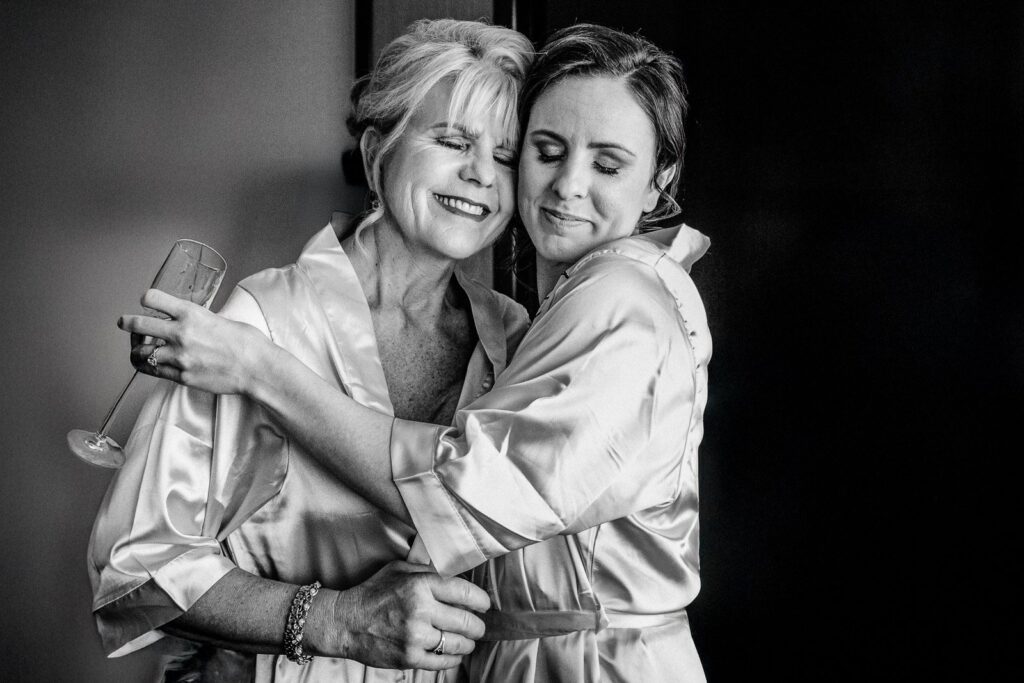
During our planning conversation I want to know which grandparent traveled the furthest, which parent is going to struggle, and who in the family everyone else leans on. That information changes where I position myself before the ceremony.
I also protect the room. When too many people crowd into the suite, quieter interactions become harder to notice, so I will gently create more space before the dress goes on.
The other half is restraint. When a grandfather takes his granddaughter’s arm, the worst thing I can do is speak.
Years from now, the frames with your parents and grandparents tend to become some of the most irreplaceable images in the gallery. That is why I treat the pre-ceremony hour as a real assignment rather than the warm-up.
Planning Your Wedding Timeline to Include Family Moments
Most couples build a timeline around the ceremony and the reception, then hand the getting-ready hours whatever is left. Reversing that instinct costs almost nothing and changes the gallery significantly.
Where Emotional Wedding Photos Before the Ceremony Fit in Your Timeline
Emotional wedding photos before the ceremony need roughly 30 to 45 minutes of unhurried space after hair and makeup finish and before anyone lines up. That window is when parents and grandparents see you dressed for the first time, which is where the day’s strongest reactions occur.
A workable structure looks like this:
- Hair and makeup complete at least 90 minutes before the ceremony
- Dress on with only the people you actually want in the room
- 15 to 20 minutes for parents and grandparents to come in, one small group at a time
- A 10 minute buffer before anyone is asked to line up
If you want a broader planning reference, The Knot’s sample morning-of timeline is a solid starting framework, and my own wedding day photography timeline guide covers how NJ venues affect those numbers in practice.
Frequently Asked Questions
Can grandparents be included in getting ready photos?
Yes, and they should be. Bringing grandparents in for a few minutes before the ceremony produces warmer, more natural images than a post-ceremony formal lineup. Keep the group small, give them a moment without direction, and let the interaction happen on its own.
Should fathers see the bride before the ceremony?
There is no rule requiring a father to wait. A private first look with a parent, roughly 20 minutes before guests are seated, consistently produces some of the most honest reactions of the day, and it gives him time to recover before he has to walk.
How much extra time should we allow?
Plan for 30 to 45 minutes beyond hair, makeup, and dressing. That protects family moments without touching your ceremony start time, and it absorbs the small delays that occur at nearly every wedding.
Should emotional moments be photographed in black and white?
Often, though not always. Black and white helps when a room’s colors compete with expression, and it suits tenderness and quiet joy particularly well. Ask your photographer to keep both versions of the frames that matter most to you.
Let’s Protect Those Minutes on Your Wedding Day
If you are planning a wedding in Northern New Jersey or NYC and want the people closest to you photographed with the same care as the ceremony itself, get in touch. Tell me who matters most, and we can build enough room into the timeline for those moments to happen without rushing them.
I am based in New Milford and I photograph weddings throughout the region. Some of the most meaningful wedding photographs are not planned, and they only exist if someone is in the room paying attention.
Reply...
The Calm Behind the Camera
About Me — But Really, It’s About You
The most meaningful wedding photos never come from stiff poses.
They come from the quiet laugh you didn’t think anyone saw.
The look on your partner’s face during the vows.
The warmth of your people all around you.
I’ve been doing this for over 30 years — and I still get nervous before every wedding.
Not because I’m uncertain, but because I know how much it matters.
After photographing hundreds of weddings over the past few decades, I’ve learned something simple:
The best photos happen when you feel fully present.
That’s why I work calmly, behind the scenes — guiding when it helps, then stepping back when the real moments unfold. I’m always anticipating what’s next, so you never have to think about a thing.
My goal is simple: to help you relax, feel confident, and walk away with photos that feel like you — not a filtered version of someone else’s idea of perfect.
Most of my couples say the same thing:
“We’re so glad we didn’t have to worry.”


trusted by over 800 couples In NYC & NJ you’re in great hands.
201-834-4999 | 917-992-9097
alex@alexkaplanweddings.com
Let’s Connect
alex@alexkaplanweddings.com
917-992-9097
I’d love to hear what you’re planning. I’ll personally reach out to learn more and see how I can help.


