
Your wedding day should feel relaxed, joyful, and completely yours.
I’m Alex Kaplan, a wedding photographer and videographer based in New Milford, NJ, serving Northern NJ, NYC, and the Hudson Valley. For over 30 years, I’ve helped couples enjoy their day without feeling rushed, while I quietly capture the real moments, natural portraits, and genuine emotions you’ll still love decades from now.
Browse by Category:
WEDDINGS
Browse by Venue:
view more

REQUEST INFORMATION
Want to feel like THIS on your wedding day?
Availability is limited. Check Your Date Here


What Makes Military Wedding Photography Unique?
Military wedding photography combines formal ceremony traditions, emotional storytelling, chapel atmosphere, and documentary-style timing to capture meaningful moments with authenticity and respect.
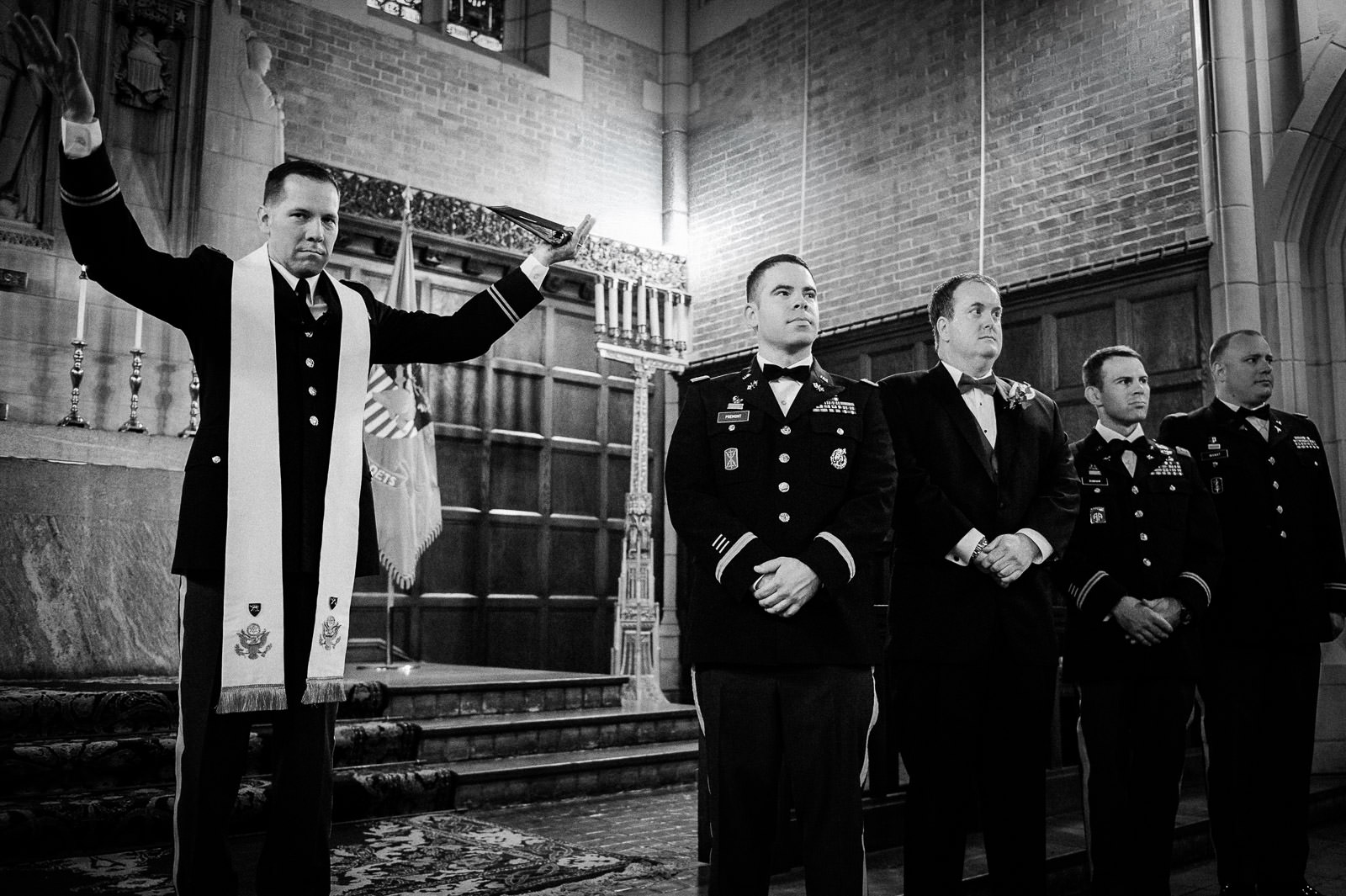
The groom was already in position when I arrived. Full dress uniform, hands clasped at his waist, facing the altar. The chapel was mostly empty still. He wasn’t adjusting anything or checking his phone. He was just standing there, completely still, the way someone stands when they have been trained to be still.
That image, before a single guest had taken a seat, told me almost everything I needed to know about what kind of day this was going to be.
Military weddings photograph unlike anything else I work on. The ceremony structure is precise. The emotional moments are compressed into narrow windows. And the visual language of dress uniforms inside a chapel produces photographs that feel genuinely timeless in a way that is almost impossible to plan for and difficult to describe until you see it.
I’ve been a documentary wedding photographer in New Jersey for over 30 years. This is among the most demanding ceremony work I do, and among the most rewarding.
The Emotional Weight of Military Wedding Ceremonies
Military ceremonies carry a different emotional weight because the people in them have been trained to hold themselves differently under pressure. Service members learn composure as a professional requirement. That discipline is real, and it shows in how they stand, how they make eye contact, how they respond when something unexpected happens.
But weddings cut through that. Not suddenly, and not completely, but enough. What I watch for is the moment when the composure starts to cost something. A father of the groom, himself a veteran, watching his son stand at the altar in full dress. A groomsman whose jaw tightens when the vows begin. A groom who has stood in situations requiring total control for years and finds that he cannot hold it together because the person walking toward him is the one person who makes that control feel beside the point.
These moments do not announce themselves. They arrive in a second and they are gone. You have to already be watching the right person, in the right position, with your attention fully on the room rather than on yourself. That is what documentary photography is built around. Not direction. Not posing. Just being present enough to catch what is actually happening between the people in the frame.
Why Black and White Photography Works So Well in Military Ceremonies
Walk into a military chapel and look at what you are actually seeing. Stone or brick walls. Dark woodwork. Candlelight mixing with stained glass filtering through high windows. And then the uniforms: high-contrast, precisely detailed, built entirely on structure and formal line.
Black and white photography removes the visual competition and puts all of the weight on what carries meaning. Expressions. Posture. Light falling across a chaplain’s vestments. The geometry of groomsmen standing at attention, shoulder to shoulder, facing the altar. The bride’s face at the moment she arrives and the groom sees her.
Color can work against itself in a setting like this. When the frame already has this much formal visual information, color adds noise rather than depth. Black and white settles the frame and focuses everything on the people, which is the only thing that actually matters in a photograph like this. This is part of why black and white has been the dominant photographic language for formal military and ceremonial documentation since the medium existed, a tradition rooted in the same formal visual values that define military ceremony itself.
You can see how this translates across different ceremony environments in the wedding gallery, where the contrast between formal dress and chapel atmosphere creates photographs that hold up fifty years from now the same way they do today.
The Ceremony Moments That Matter Most
The chapel entrance formation sets the entire day in motion. In the minutes before the processional, when groomsmen take their positions and the room goes fully quiet, something shifts. Everyone in those pews already knows what is about to happen. That collective anticipation is something a camera can actually capture, and it is one of the first things I position for before any military ceremony begins.
When the blessing comes, it tends to produce the most visually striking images of the ceremony. Military chaplains deliver with a weight and formality that focuses the entire room toward a single focal point. Raised hands. Bowed heads. The physical structure of a blessing creates compositions that feel almost classical, and the photograph in this post is from exactly that moment. It is one of the strongest ceremony images I have made in New Jersey.
The vows are where composure most often gives way. Over 30 years of photographing weddings across Northern New Jersey and the region, I’ve watched people who hold themselves together in genuinely difficult situations find that they cannot manage it when the person they love is standing three feet away. Military couples feel what everyone feels. The training manages the surface, until the moment it cannot.
The quiet immediately after the ceremony is something most guests never fully register, but it is one of the moments I stay closest to. The formal structure releases. People breathe again. Nobody is performing for anyone. Those few minutes between the recessional and whatever comes next contain some of the most unguarded images of the entire day, and they go fast.
The Real Challenges of Photographing Military Chapel Weddings
Chapel lighting is genuinely difficult to work in. Most military chapels and historic church venues in New Jersey were not designed with photography in mind. Light sources are mixed, ambient levels are low, and once the ceremony begins, repositioning is not an option.
I work with available light wherever possible, and military ceremonies require it absolutely. Disrupting the formal structure with flash adjustments, movement through the room, or any action that draws attention to the photographer would be completely wrong for this kind of ceremony. The photographs have to come from preparation and observation, not from redirecting people or inserting yourself into a room that is not about you.
The compressed timeline adds its own pressure. Military ceremonies run with purpose and precision. Emotional moments do not offer second chances. You are either positioned and paying attention when they arrive, or they are already behind you.
Couples planning formal church or chapel weddings in New Jersey, including the kind of ceremony covered in this St. Hedwig Church winter wedding, benefit from working with a photographer who already understands how ceremonial structure moves and how to work quietly inside of it. There is no faster way to develop that than simply doing the work, year after year, in rooms like this one.
What Experience Actually Looks Like in This Work
Over 30 years and more than 800 weddings photographed across New Jersey and the surrounding region, I’ve worked in enough chapel environments to understand how they tend to unfold before they do. That knowledge accumulates slowly and it shows in the photographs.
It is not something that transfers from reading about chapel lighting or watching ceremony footage. It comes from walking into a room and knowing within ten minutes where the emotional weight of the day is going to land, where the light will fall during the blessing before the blessing begins, and how close you can get to the front rows during the vows without a single person noticing you’re there.
With more than 630 Google reviews from couples across Northern New Jersey and the NYC metro area, the feedback I hear most consistently is not about cameras or editing. It is about the moments that appeared in the photographs that nobody expected to be there. That is what 30 years of this work actually looks like.
Military Wedding Photography: Questions Worth Asking
What makes military weddings unique to photograph compared to traditional ceremonies?
The combination of formal ceremony structure, dress uniforms, chapel atmosphere, and emotionally disciplined subjects creates a visual and documentary environment that is genuinely different from a traditional wedding. The emotional moments are compressed into narrower windows, the ceremony flow is more precisely structured, and the contrast between formal military bearing and the emotional reality of a wedding produces photographs that carry a very specific kind of weight. For a documentary photographer, military weddings are some of the most demanding and most rewarding work available.
Why does black and white photography work so well for military chapel ceremonies?
A military chapel is already a high-contrast visual environment: dark woodwork, mixed light sources, precisely detailed dress uniforms, formal architectural lines. Color photography in this setting can compete with itself, splitting the viewer’s attention across visual information that does not contribute to the emotional story. Black and white settles the frame and directs everything toward expressions, posture, and light, which are the elements that actually carry meaning in a ceremony photograph. The timeless quality of black and white also matches the formal, historically rooted nature of military tradition in a way that feels honest rather than stylistic.
What should couples look for in a military wedding photographer in New Jersey?
Experience with formal ceremony environments is the most important factor. Chapel lighting, restricted movement during the ceremony, compressed emotional moments, and the specific visual language of dress uniforms all require a photographer who has worked in these conditions before. Beyond technical familiarity, look for a documentary approach rather than a directive one. Military ceremonies require a photographer who understands how to observe rather than interrupt. Reviewing ceremony-specific work, not just portrait or reception photography, gives you the clearest picture of whether a photographer is prepared for this environment.
How do photographers handle low-light chapel conditions during military ceremonies?
Available light is the primary tool. Most military chapels and historic New Jersey church venues were not designed for photography, and flash use during a formal military ceremony is inappropriate for the environment. Working in available light requires equipment that performs well at high ISO and lenses with wide maximum apertures, but more importantly it requires knowing in advance where the light is going to be during each phase of the ceremony. That comes from arriving early, reading the space before guests arrive, and understanding how ceremonial structure moves so you are already in position before the moments you need to capture actually happen.
Planning a Military Wedding in New Jersey
If you are planning a military chapel ceremony in New Jersey or the surrounding area and thinking through the photography, reach out.
My approach is documentary first and everything else second. I am not going to interrupt your ceremony, rearrange your groomsmen, or ask anyone to repeat a moment for the camera. I will show up prepared, stay invisible when the ceremony requires it, and make sure the photographs reflect what actually happened in that room.
Call 917-992-9097 or 201-834-4999, or reach out through the contact page and I’ll get back to you directly.
Reply...
The Calm Behind the Camera
About Me — But Really, It’s About You
The most meaningful wedding photos never come from stiff poses.
They come from the quiet laugh you didn’t think anyone saw.
The look on your partner’s face during the vows.
The warmth of your people all around you.
I’ve been doing this for over 30 years — and I still get nervous before every wedding.
Not because I’m uncertain, but because I know how much it matters.
After photographing hundreds of weddings over the past few decades, I’ve learned something simple:
The best photos happen when you feel fully present.
That’s why I work calmly, behind the scenes — guiding when it helps, then stepping back when the real moments unfold. I’m always anticipating what’s next, so you never have to think about a thing.
My goal is simple: to help you relax, feel confident, and walk away with photos that feel like you — not a filtered version of someone else’s idea of perfect.
Most of my couples say the same thing:
“We’re so glad we didn’t have to worry.”


trusted by over 800 couples In NYC & NJ you’re in great hands.
201-834-4999 | 917-992-9097
alex@alexkaplanweddings.com
Let’s Connect
alex@alexkaplanweddings.com
917-992-9097
I’d love to hear what you’re planning. I’ll personally reach out to learn more and see how I can help.


